Water Pump Selection : How to Choose the Right Water Pump
Most pump failures in Saudi projects aren’t caused by bad equipment. They’re caused by a selection made too quickly, without looking at what the system actually needs.
“We see it more often than you’d think a pump that looks perfect on paper, runs for three months, then starts failing every few weeks. The pump isn’t the problem. The selection was.”
– Kanzotech Pumps
Let’s be honest about something. Most guides on pump selection read like a product catalogue with headings. They tell you centrifugal pumps handle clean water and submersible pumps go underground, and then they stop there.
That’s not enough for real projects. Not in Saudi Arabia, where you’re dealing with 50°C ambient temperatures, sand-heavy water on construction sites, deep brackish aquifers in agriculture zones, and high-rise residential towers in Riyadh that need consistent pressure across 30+ floors.
At Kanzotech Pumps, we’ve worked across these exact environments, from construction dewatering sites across the Eastern Province to agricultural borewell systems in Al-Qassim . This guide is written the way our engineers would explain things to someone sitting across a table, no padding, no theory without context.
Why Selection Matters More Than Brand
There’s a common habit in procurement: Focus on the brand name and the price. If it’s a recognizable manufacturer and the cost fits the budget, the box gets ticked. The problem is this approach treats the pump as the end decision, when it’s actually the result of a decision and that decision is the system requirement.
A premium pump running outside its ideal operating range will perform worse than a mid-range pump correctly matched to the system. You’ll see this show up as vibration, pressure instability, higher energy bills, and premature seal or bearing failure.
The four things selection directly controls are performance, energy use, equipment lifespan, and operational stability. Get selection right and all four take care of themselves. Get it wrong and no amount of maintenance catches up. If you’re unsure where to start,
our team at Kanzotech Pumps can guide the selection based on your actual system requirements
Common Mistake
Oversizing a pump to “play it safe” is one of the most frequent errors. An oversized pump runs far from its best efficiency point, consumes more power, creates excess pressure, and wears out faster — not safer at all.
1.Centrifugal Pumps :
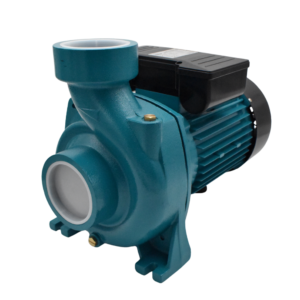
The most widely used pump type. Works by spinning an impeller to create flow. Efficient, reliable, and designed for continuous operation with clean or lightly loaded fluids.
Water transfer | Factories | HVAC systems | Desalination feed
2.Submersible Pumps :
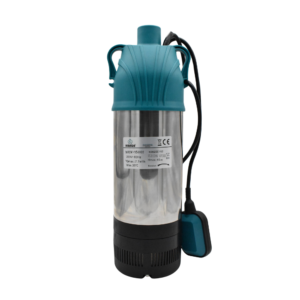
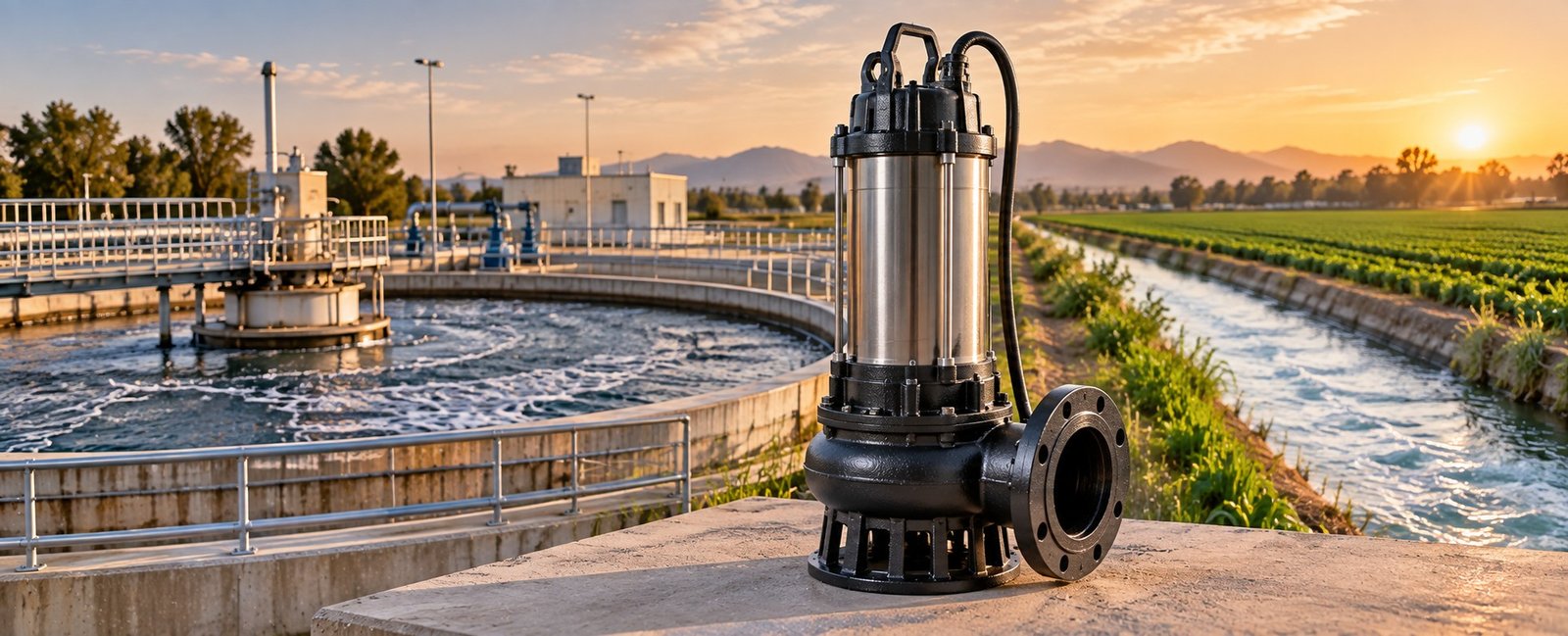
Designed to operate fully underwater. Used for deep borewell applications across Saudi farmland and construction dewatering where surface-mounted pumps can’t reach the water level.
Borewells | Dewatering | Agriculture | Deep excavations
3.Booster Pumps :
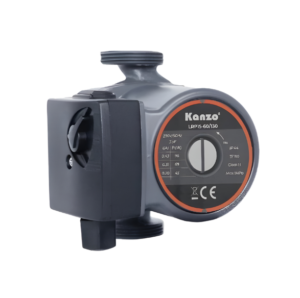
Specifically designed to increase water pressure in distribution systems. Essential in high-rise buildings across Riyadh, Jeddah, and other Saudi cities where gravity alone can’t maintain consistent pressure on upper floors.
High-rise buildings | Hotels | Commercial towers
4.Positive Displacement Pumps / Industrial heavy duty pumps :
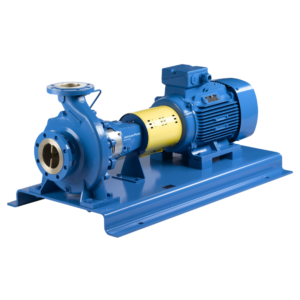
Delivers a fixed volume per cycle regardless of pressure. The right choice when you need precise flow control or when the fluid is viscous, abrasive, or chemically aggressive.
Oil & gas | Chemical dosing | Slurry transfer | EOR systems
If your fluid is clean water and you need volume –> go for centrifugal pumps.
If your source is deep underground –> go for submersible pumps.
If your building has pressure problems –> go booster pumps.
If your fluid is heavy, precise or chemically aggressive –> go positive displacement pumps.
Everything else is detail.
The Six Factors That Actually Determine Your Selection
These aren’t just parameters to fill in on a datasheet. Each one has real consequences if you get it wrong, and in Saudi Arabia’s operating environment, the margin for error is narrower than most assume.
Flow Rate — How Much Water Do You Actually Need?
This is the volume of water the system must move, typically measured in litres per minute (LPM) or cubic metres per hour (m³/h). The mistake here isn’t usually the calculation, it’s using average demand instead of peak demand. Always size for peak, not average. A construction site dewatering pump running at average demand will fall behind the moment rainfall or ground seepage spikes.
Total Head — The Number Most Engineers Get Wrong
Head is the total resistance the pump must overcome. It combines the vertical rise of water, the friction losses inside the pipe network, and the minor losses from every valve, bend, and fitting in the system. Underestimate the head and your pump will run under-capacity. Overestimate it and you’ll introduce excess pressure that stresses the whole system.
Total Dynamic Head Formula
TDH = Static Head + Friction Head + Minor Losses
Static Head —> Vertical distance water travels (metres)
Friction Head —> Losses inside pipes (Darcy-Weisbach equation)
Minor Losses —> Valves, bends, fittings: h = K × V²/2g
Safety Margin —> Add 10–20% for Saudi field conditions
The friction head calculation uses the Darcy-Weisbach equation for engineering-grade accuracy, or the Hazen-Williams formula for water systems where a simpler approach is sufficient. In either case, longer pipes and smaller diameters mean significantly higher losses. A system that looks fine on paper with 2-inch pipe over 300 metres may need 3-inch pipe once real losses are calculated.
Fluid Type — Not All Water is the Same
Clean municipal water, sand-laden construction runoff, brackish groundwater from a Saudi aquifer, and process chemicals in a petrochemical plant all behave differently and they require different materials and seal types. In construction across the Eastern Province, for example, groundwater often contains fine silica particles that will destroy a standard centrifugal pump impeller in weeks. You need a pump designed for that load, or a slurry pump rated for abrasive duty.
Temperature — Saudi Arabia’s Most Underestimated Factor
Ambient temperatures regularly exceed 45–50°C in summer across most of Saudi Arabia. This affects motor efficiency, bearing grease viscosity, mechanical seal performance, and the vapour pressure of the fluid — which directly impacts cavitation risk. Standard pump motors are typically rated at 40°C ambient. In Saudi summers, you need to derate the motor and select seals with high-temperature elastomers like Viton or PTFE.
Kanzotech pumps Field Insight
“For outdoor pump installations in Saudi Arabia, always derate motor capacity by 10–15% to account for elevated ambient temperatures, and specify IP55 protection minimum against dust and sand ingress. In coastal areas, add marine grade coatings and stainless shaft sleeves for salt air corrosion resistance.”
Talk to our team about the right spec for your site
Power Source — Electric or Diesel?
For permanent or semi-permanent installations with reliable grid access, electric pumps are more efficient and lower in maintenance. For remote sites, construction locations without infrastructure, or emergency backup systems, diesel-driven pumps are the practical answer. In line with Vision 2030 infrastructure projects, solar-integrated pumping is growing especially for agricultural and remote water supply applications.
Operating Conditions — What the Environment Demands
A pump on a coastal Jeddah building faces different stresses than one on a Riyadh construction site or an irrigation system in Al-Qassim. Coastal environments mean salt air corrosion. Desert interiors mean sand ingress and heat. Industrial zones mean chemical exposure and continuous high-duty cycles. The environment defines your material spec, your protection rating, and your maintenance interval before you even choose the model.
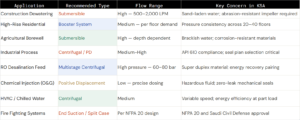
Application to Pump Reference
Use this as a starting point , not a final answer. Every project has variables that change the picture, but this gets you to the right category quickly.
The Seven-Step Selection Process
This is the process that prevents the most common mistakes. Follow it in order, skipping steps is where errors usually begin.
- Define the Application Precisely
What is the pump actually doing? Moving water from a tank to a roof? Dewatering a basement excavation? Feeding an RO membrane at 70 bar? The application determines everything that follows — don’t be vague at this stage.
- Establish the Flow Requirement
Calculate peak demand, not average. For buildings, this means peak usage periods , typically morning and evening. For industrial systems, it means maximum process flow. Add a buffer of at least 10% on top of the calculated peak.
- Calculate Total Dynamic Head
Don’t estimate this , calculate it. Static head (elevation), friction head (pipe length and diameter), and minor losses (valves, fittings) must all be accounted for. Then add a 15–20% safety margin specifically for Saudi field conditions.
- Identify the Fluid and Its Properties
Temperature, viscosity, solids content, pH, and chemical composition all affect material selection, seal type, and pump design. Brackish, sand-laden, or chemically aggressive fluids each require specific configurations.
- Select Pump Type and Model
With flow, head, and fluid characteristics defined, the pump type becomes clear. Choose a model whose duty point (the actual operating flow and head) falls within 80–110% of the pump’s Best Efficiency Point on its performance curve.
- Check NPSH Margins and Cavitation Risk
Calculate available NPSH from your system layout and confirm it exceeds the pump’s required NPSH by at least 0.5–1.0 metres. In high-temperature Saudi applications, this margin needs extra attention as vapour pressure increases significantly with temperature.
- Confirm System Compatibility and Standards
Ensure the selected pump meets the applicable standards API 610 for oil and gas, NFPA 20 for fire, Saudi Water Authority specs for municipal projects. Verify that the supplier is on the relevant Approved Vendor List (AVL) for your project.
“On paper, calculations may look correct. But in real conditions sand in water, long pipelines, 48°C ambient the numbers shift. Always design with a safety margin, not to the limit.”
— Kanzotech Pumps Engineering Team, based on field experience across KSA projects
Five Mistakes That Keep Coming Up on Saudi Projects
These aren’t theoretical concerns. They show up repeatedly across construction, irrigation systems , and industrial projects across the Kingdom.
1. Oversizing “To Be Safe”
Running a pump far from its best efficiency point wastes energy, causes excessive vibration, and shortens equipment life. A 30% oversized pump is not safer — it’s just more expensive to run and maintain.
2. Ignoring Friction and Minor Losses in Head Calculation
Static head is obvious the vertical rise. Friction losses in long pipe runs and minor losses across valves and fittings are easy to underestimate, especially on complex site layouts. These can easily add 20–30% to the actual total head.
3. Selecting Standard Materials for Saudi Groundwater
Much of Saudi Arabia’s groundwater is brackish, with high TDS and sometimes elevated sulfate content. Standard cast iron impellers and shafts will corrode within months. Duplex stainless or fiberglass-lined components are the practical choice for most borewell applications.
4. Not Accounting for Ambient Temperature on Motor Rating
A motor rated at 40°C ambient loses approximately 3–5% of its output capacity for every 5°C above that rating. In a Saudi summer, that matters significantly. Not derating the motor leads to overheating and premature failure.
5. Selecting on Price Without Considering Lifecycle Cost
For a large process pump running 8,000 hours a year, energy cost alone can represent 50–60% of total lifecycle cost over ten years. A pump that costs 20% more upfront but runs 8% more efficiently pays for itself within 18–24 months in energy savings.
Pre-Selection Checklist
Before you finalise any pump selection, go through this. It takes ten minutes and prevents the kinds of problems that take weeks to fix on site.
Selection Verification Checklist
1.Flow rate defined at peak demand
Not average worst-case scenario with a 10% buffer on top
2.Total Dynamic Head fully calculated
Static head + friction losses + minor losses + 15% safety margin
3.Fluid properties fully characterised
Temperature, solids content, chemical composition, viscosity
4.NPSH margin confirmed
NPSHa must exceed NPSHr by at least 0.5–1.0 m at maximum operating temperature
5.Pump duty point falls near BEP
Operating point should be within 80–110% of Best Efficiency Point on the curve
6.Motor derated for Saudi ambient temperature
10–15% derating for outdoor installations above 40°C ambient
7.Materials confirmed for fluid and environment
Seals, impeller, casing all compatible with fluid chemistry and ambient conditions
8.Applicable standards verified
API 610 / 674 / 676, NFPA 20, Saudi Water Authority specs, SAES-G-005 as applicable
FAQ
1.How do I choose the right pump for harsh environments (heat, dust, sand)?
For extreme environments:
- Use corrosion-resistant materials (e.g., stainless steel, duplex alloys)
- Select robust sealing systems (mechanical seals or gland packing)
- Ensure proper cooling and bearing protection
Environmental factors significantly impact pump lifespan and reliability.
2.How can I select an energy-efficient pump?
Focus on:
- Operating near Best Efficiency Point (BEP)
- High-efficiency motor selection
- Variable Frequency Drives (VFDs)
- Lifecycle cost (not just purchase cost)
Energy efficiency is critical, especially in high-consumption sectors like desalination.
3.How do I prevent cavitation in pumps?
To avoid cavitation:
- Maintain proper suction head
- Reduce fluid temperature if possible
- Minimize suction pipe losses
- Select pumps with lower NPSHr
Proper system design is as important as pump selection.
4.What is NPSH and why is it important in pump selection?
NPSH (Net Positive Suction Head) ensures that the pump operates without cavitation.
You must ensure:
- NPSHa (available) > NPSHr (required)
Failing this can cause:
- Cavitation
- Noise and vibration
- Severe damage to pump components
A Final Word on How to Approach This
Pump selection is one of those engineering decisions that looks simple on the surface and only reveals its complexity once something goes wrong. The frustrating thing is that most pump failures on Saudi projects from construction dewatering in Riyadh to agricultural borewells in Al-Jouf to high rise booster systems in Jeddah, were preventable at the selection stage.
The goal isn’t to find the best pump. It’s to find the right pump for your specific system, your specific fluid, and your specific operating environment. Those aren’t always the same thing.
When the selection is correct, systems run quietly, energy bills stay predictable, and maintenance schedules are routine rather than reactive. That’s the standard Kanzotech Pumps holds every project to and it starts before you ever open a product catalogue.




 September 12, 2026
 HYZAM KENZ



Comments
No comments yet. Be the first to comment!