Introduction : Construction Site Pump Selection
“We’ve seen contractors on-site with a pump spec that looks right on paper , until you realize they’re trying to move 1,200 LPM of sand-heavy groundwater with a clean-water centrifugal. Two days in, the impeller’s shot and the work’s stopped.”
— Kanzotech Pumps
Construction sites don’t give advance notice when water becomes a problem. One day the excavation pit is manageable. The next morning, overnight seepage or a rain event has flooded the work area and everything stops until the water’s gone.
What separates projects that handle this smoothly from ones that lose days is rarely the pump brand or the horsepower rating. It’s whether the contractor chose equipment that matches what’s actually in the pit, not what was assumed to be there.
At Kanzotech Pumps, we’ve supplied dewatering systems across construction sites in Riyadh, Jeddah, the Eastern Province, and NEOM. The projects that run without interruption all follow the same selection logic.
Why Construction Site Pump Selection is Different
Standard pump selection assumes relatively stable conditions, clean fluid, known flow rate, and fixed installation. Construction sites offer none of that.
Water quality changes daily. An excavation that starts with clear groundwater seepage can turn into sand-laden slurry after a few days of digging. Rainfall introduces surface runoff mixed with topsoil. Concrete washout adds cement particles. The pump that worked on day one may not survive day five if it wasn’t selected for the worst-case fluid, not the best-case.
Flow demand is unpredictable. A 12-meter basement excavation might have minimal seepage under normal conditions, but a single overnight rain can triple the inflow rate. If the pump was sized for average conditions, it falls behind when demand spikes and once you’re behind on dewatering, catching up costs more than over-specifying from the start.
Setup is temporary and rough. Pumps get moved multiple times during a project. They sit outdoors in 48°C heat and sandstorms. They’re operated by rotating crews with varying levels of experience. The equipment needs to handle all of this without constant supervision.
Contractor Reality Check
“Clean-water centrifugal pumps fail fast in construction dewatering. Sand particles erode impeller vanes within 50–100 operating hours. If your groundwater has visible sediment, you need a slurry-rated pump from day one not after the first failure.”
The Four Pump Types Contractors Actually Use
There are dozens of pump classifications, but on Saudi construction sites, the work comes down to four types. Understanding which one fits your specific site condition is the difference between smooth operation and repeated breakdowns.
Submersible Dewatering Pumps
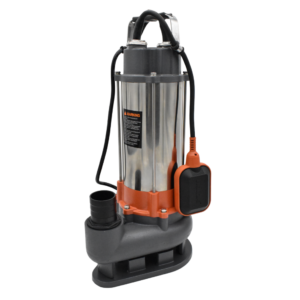
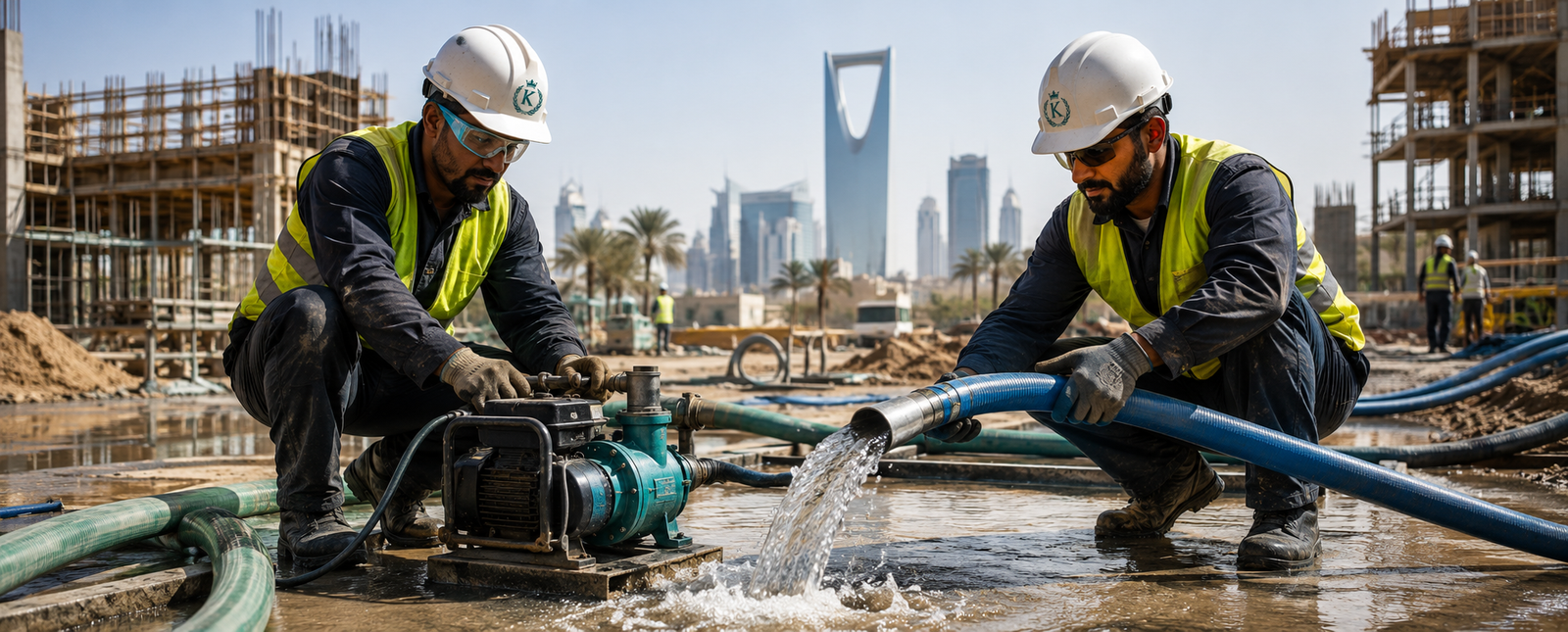
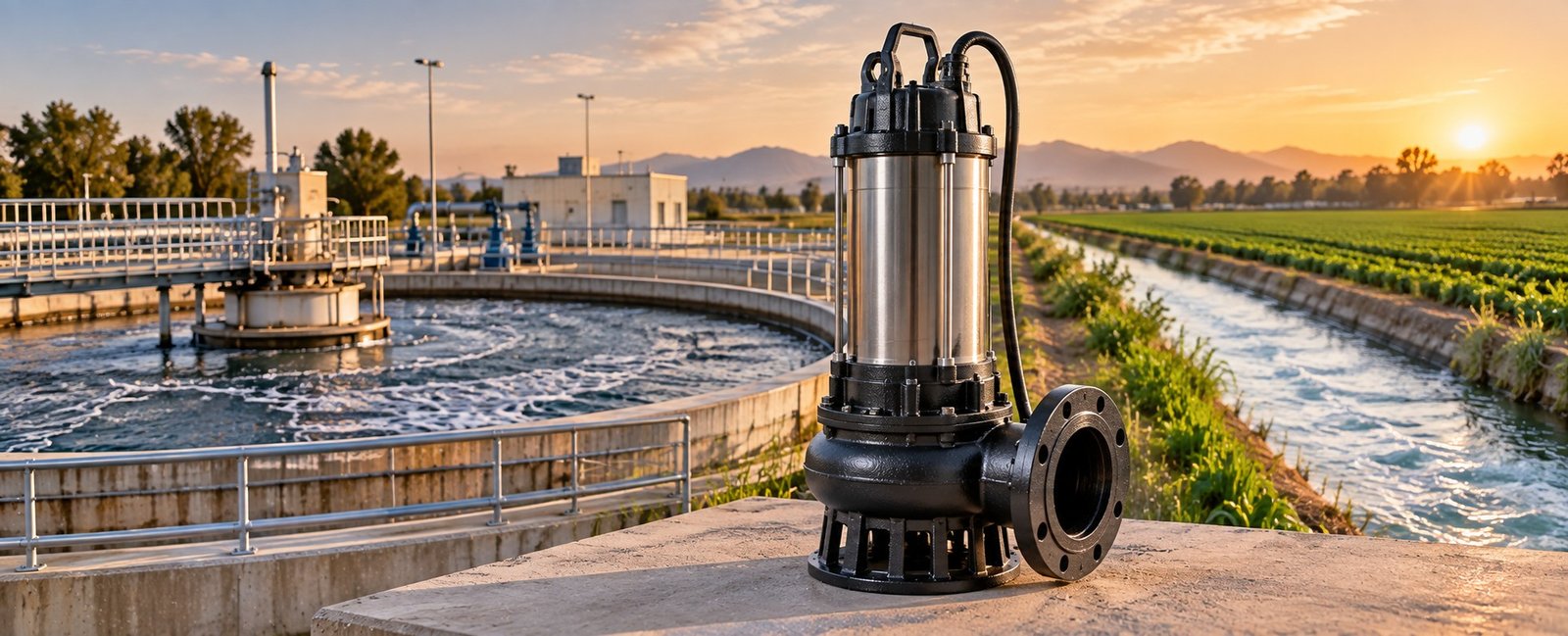
Submersible Dewatering Pumps are designed to sit directly in the water being pumped. The motor and pump assembly operate fully submerged. Most common choice for excavation pits, trenches, and basement dewatering across Saudi construction sites.
Typical Flow Range
300–2,500 LPM depending on model and head requirements
Slurry Pumps
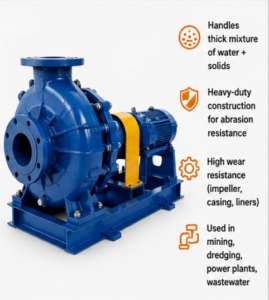
Built with hardened impellers and wear-resistant casings to handle water mixed with sand, silt, and solids up to 25–35mm diameter. Essential when groundwater contains fine particles that would destroy standard pumps.
Solids Handling
Up to 40% solids by volume in premium models
Trash Pumps
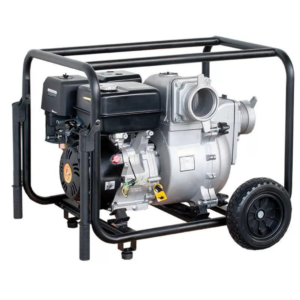
Large-passage impeller design allows debris, small stones, and construction waste to pass through without clogging. Used in surface runoff control and areas where conventional screening isn’t practical.
Debris Capacity
Handles solids up to 50–75mm depending on inlet size
Diesel-Driven Pumps
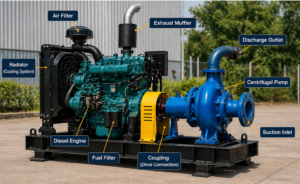
Self-contained pumping units with integrated diesel engines. Critical for remote sites, areas without grid power, or emergency backup when electrical supply is unreliable during Saudi summer peak loads.
Runtime
8–12 hours continuous operation on a single fuel tank
How to Size a Pump for Construction Dewatering
The most common sizing mistake contractors make is calculating based on steady-state seepage and ignoring peak inflow events. This approach guarantees the pump will be undersized when it matters most.
Step 1: Estimate Peak Inflow Rate
Don’t size for average seepage. Size for the worst inflow scenario the site is likely to face — heavy rain, high water table, or rapid excavation in saturated soil. In Saudi Arabia, this typically means accounting for flash rainfall events that can dump 30–50mm in a few hours, even in normally arid regions.
A practical rule for excavation dewatering: estimate 0.5–1.5 LPM per square meter of pit floor area for normal seepage, then multiply by 2–3× to cover peak rain events. A 20m × 30m basement excavation (600 m²) would need 600–900 LPM for steady seepage, but 1,800–2,700 LPM to stay ahead during heavy rain.
Step 2: Calculate Total Head
Head isn’t just the depth of the excavation. It’s the vertical lift from the pump discharge to the disposal point, plus friction losses in the discharge hose, plus any backpressure from pumping uphill or into a drainage system.
For a typical construction setup with a submersible pump at the pit bottom and discharge hose running to a surface disposal point:
Static head: Pit depth + any rise to disposal point (e.g., 8m pit + 2m rise = 10m static head)
Friction head: Approximately 1–1.5m per 100m of 100mm discharge hose at 1,000 LPM flow
Safety margin: Add 15–20% to total head for Saudi conditions (heat, hose wear, debris buildup)
Example Calculation
15-Meter Basement Excavation — Riyadh Clay Soil
Pit Dimensions : 25m × 40m × 15m deep
Estimated Seepage : 1,000 m² floor × 1 LPM/m² = 1,000 LPM steady
Peak Rain Inflow : 1,000 LPM × 2.5 = 2,500 LPM peak demand
Static Head : 15m (pit depth) + 3m (surface rise) = 18m
Friction Losses : 150m hose × 1.2m/100m = 1.8m
Total Head : 18m + 1.8m + 20% margin = 24m TDH
Required Spec : 2,500 LPM @ 24m head — or dual 1,250 LPM pumps for redundancy
Step 3: Choose Between Single Large Pump or Multiple Smaller Units
For critical timeline projects or deep excavations, redundancy matters more than efficiency. Two 1,500 LPM pumps cost more upfront than one 3,000 LPM unit, but if one fails, work continues. On large metro or infrastructure projects, this approach is standard.
Kanzotech Pumps Field Recommendation
“For excavations deeper than 10 meters or projects with strict timeline penalties, always spec 2× smaller pumps instead of 1× large pumps. Our rental service offers staged deployment start with one unit for initial dewatering, add the second when you hit peak depth or rainy season.”
Matching Pump Type to Water Condition
The single most important decision is identifying what’s actually in the water. Clean groundwater, sand-laden seepage, and debris-filled runoff each require different equipment. Get this wrong and the pump won’t last a week.
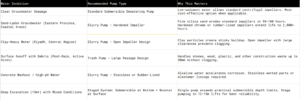
Power Source Decision — Electric vs. Diesel
This isn’t just about availability. It’s about total operating cost, site logistics, and failure risk over the project duration.
Electric Pumps — When Grid Power is Reliable
Lower fuel cost, quieter operation, and less maintenance. For sites with stable three-phase power and projects lasting more than 4–6 weeks, electric pumps deliver lower total cost of ownership. The break-even point is typically 300–400 operating hours — after that, fuel savings outweigh the diesel pump’s lower rental rate.
The constraint is power availability and quality. Saudi summer peak demand can cause voltage sags or outages in some areas. If the site transformer is undersized or shared with other heavy equipment, verify that adding a 15–22 kW pump motor won’t trip the main breaker during startup.
Diesel Pumps — For Remote or Unreliable Power Sites
Higher operating cost but completely independent of grid infrastructure. Essential for remote NEOM sites, highway projects, or any location where power is temporary or unreliable. Diesel also serves as automatic backup , if site power fails overnight, the dewatering doesn’t stop.
Fuel consumption is the hidden cost. A typical 15 kW diesel pump consumes 4–6 liters per hour under load. At 12 hours per day operation, that’s 50–70 liters daily over a 60-day project, 3,000–4,200 liters total. At current Saudi diesel prices, fuel alone can exceed the equipment rental cost.
Cost Reality
“For projects longer than 6 weeks with reliable power, electric pumps save 40–60% in operating costs compared to diesel. For short-term or remote work, diesel’s independence outweighs the fuel expense. Don’t choose based on rental rate alone , calculate total cost including fuel, electrical hookup, and downtime risk.”
Saudi-Specific Consideration
Construction pumping in Saudi Arabia involves environmental and regulatory factors that don’t appear in generic selection guides but directly affect equipment performance and project compliance.
Ambient Temperature Impact on Motor Performance
Standard electric motors are rated at 40°C ambient. Summer temperatures across Riyadh, the Eastern Province, and most Saudi construction zones regularly hit 45–50°C. Motors lose approximately 3–5% of rated capacity for every 5°C above their design temperature. A 15 kW motor in 48°C ambient effectively delivers 13–14 kW.
The practical fix is motor derating. Specify pumps with 10–15% oversized motors for outdoor summer operation, or choose totally-enclosed fan-cooled (TEFC) motors rated for Class F insulation (155°C) instead of standard Class B (130°C). The cost difference is minimal — 8–12% — but eliminates thermal overload trips during peak heat.
Sand and Dust Ingress in Motor Housings
Saudi construction sites mean airborne dust and sand. Standard IP54 motor protection (splash-proof) isn’t enough. Specify IP55 minimum dust-protected with sealed bearing housings and gasketed cable entries. For sites with active sandstorms or near-desert conditions (NEOM, western Riyadh developments), IP56 or IP65 is the practical standard.
Water Disposal and Environmental Compliance
Dewatering discharge isn’t just a logistics issue it’s regulated. Pumping directly into storm drains, wadis, or onto adjacent land without approval can halt the project. Most Saudi municipalities require a dewatering discharge permit specifying disposal location, flow rate limits, and water quality testing for pH and suspended solids.
For projects inside city limits (Riyadh, Jeddah, Dammam), coordinate discharge permits with the municipality before excavation begins. For remote or mega-project sites, environmental consultants typically handle this, but the contractor is still responsible for ensuring pump discharge meets the approved spec — usually <500 mg/L suspended solids and pH 6.5–8.5.
Pre-Selection Checklist for Contractor
Before you commit to equipment rental or purchase, run through this. It takes 10 minutes and prevents the kinds of failures that cost days.
Construction Dewatering — Equipment Selection Checklist
1. Water quality identified —> clear, sand-laden, clay-heavy, or debris-filled?
2. Peak inflow rate calculated —> not average seepage, but worst-case rain event
3. Total head confirmed —> pit depth + surface rise + friction losses + 20% margin
4. Power source verified —> grid reliability checked, or diesel spec’d for remote sites
5. Motor protection adequate —> IP55 minimum for Saudi dust conditions
6. Redundancy considered —> backup pump or dual-unit setup for critical timeline projects
7. Discharge permit status —> municipal approval obtained for dewatering disposal
8. Hose and fittings sized correctly —> 100mm minimum for 1,000+ LPM, 150mm for 2,500+ LPM
Conclusion
The difference isn’t the size of the pump or the brand name on the motor. It’s whether the equipment was selected for the actual conditions on-site, not the conditions assumed during planning.
Contractors who get this right do three things consistently: they size for peak demand instead of average, they match pump type to water quality instead of grabbing whatever’s available, and they plan for redundancy on timeline-critical work instead of hoping nothing fails.
At Kanzotech Pumps, we’ve seen both outcomes across hundreds of Saudi construction sites. The projects that finish on schedule from residential high-rises in Riyadh to industrial complexes in Jubail all follow the same selection logic. The ones that lose time to pump issues made the decision too fast, based on what was convenient rather than what the site actually needed.
If you’re planning excavation or foundation work and water is part of the equation, don’t guess on the equipment. The cost of getting it wrong in delays, re-rental, and timeline penalties is always higher than the cost of getting it right the first time. For detailed technical guidance on head calculations and system design, see our complete pump selection guide.



 September 12, 2026
 HYZAM KENZ



Comments
No comments yet. Be the first to comment!