Choosing the Right Irrigation Pump What Saudi Farmers Actually Need to Know
Most irrigation problems in Saudi Arabia aren’t caused by water shortages. They’re caused by poor agricultural water pump selection, where pumps are chosen without fully accounting for depth, water quality, and what the irrigation system actually requires at the farm end.
“A farmer in Al-Qassim called us after his drip irrigation system kept running unevenly, some rows flooded while others barely got water. The pump was a good brand, correct horsepower rating, purchased six months earlier. The problem was it was selected for the borewell depth but nobody checked what pressure the drip lines actually needed at the field end.”
— Kanzotech Pumps
Saudi Arabia produces dates, wheat, vegetables, and livestock feed across some of the most water-stressed agricultural land on earth. The farms that do this successfully all have one thing in common: their water supply is reliable. Not abundant , reliable. The pump is what makes it reliable, and a wrong agricultural pump selection takes that away.
This guide covers agricultural pump selection the way it needs to be covered starting with your water source, working through your irrigation system requirements, and landing on a selection that matches both. It’s written specifically for Saudi conditions: deep brackish aquifers, high ambient temperatures, solar-powered remote farms, and the pressure requirements of modern drip systems.
Kanzotech Pumps supplies irrigation and borewell pump systems to farms across Al-Qassim, Al-Jouf, Ha’il, Tabuk, and the Eastern Province. What we cover in this guide is what we’ve learned from those projects ,not what the product catalogue says.
Why Agricultural Pump Selection is More Complex Than It Appears
There’s a temptation to think of farm pump selection as straightforward , water is underground, pump it up, distribute it. The reality involves a chain of interacting requirements: how deep the water is, how much head the pump can generate, what condition the water is in when it arrives, and what pressure the irrigation system needs to distribute it evenly.
Get any one of these wrong and the problem often shows up downstream , as uneven irrigation, as a pump that runs but delivers half the expected flow, or as a system that works in spring but struggles when groundwater levels drop two meters in summer.
In Saudi Arabia specifically, the challenges are compounded by three factors most generic pump guides don’t address: extreme groundwater depths in many agricultural regions, high mineral and sand content in aquifer water, and the growing shift to solar-powered pumping on farms far from grid infrastructure. Each one changes the selection significantly.
Start With the Water Source , It Determines Everything Else
Before pump type, before horsepower, before brand , identify your water source. The source determines the pump type, the depth determines the head requirement, and the water quality determines the materials and design needed to prevent rapid wear.
Borewell / Deep Well
30–300m depth typical in Saudi Arabia
Submersible Multistage Pump
Surface Water / Tank
0–8m suction head typical
Centrifugal / Self-Priming Pump
Stored / Treated Water
Pressurized distribution required
Booster Pump System
Borewell Depths in Saudi Agricultural Regions
Groundwater depth varies significantly by region and has been deepening as aquifers are drawn down over decades of intensive irrigation. Understanding the typical depth range in your region is the starting point for specifying pump head requirements:
Al-Qassim and Riyadh Region: Typically 60–150m. Sedimentary aquifer water often moderately brackish (TDS 1,000–3,000 mg/L) with fine sand content requiring sand screens and wear-resistant impellers.
Al-Jouf and Tabuk: Can reach 150–300m in some areas. The Saq aquifer in this region is heavily utilized; water quality varies from relatively clean to high sulfate content requiring specific material compatibility.
Eastern Province: Shallower in some coastal areas (30–80m) but with high salinity in many locations. The shallow depth is deceptive — the water’s chloride content demands stainless or duplex steel throughout the wetted path, not standard cast iron.
Critical Point for Saudi Borewell Selection
“Always specify the pump for the seasonal low water level, not the current static level. In many Saudi aquifers, water tables drop 3–8 meters between spring (highest) and late summer (lowest) due to peak agricultural demand. A pump selected on the spring static level will cavitate and underperform when you need it most , during summer peak irrigation periods.”
The Four Pump Types in Agricultural Use
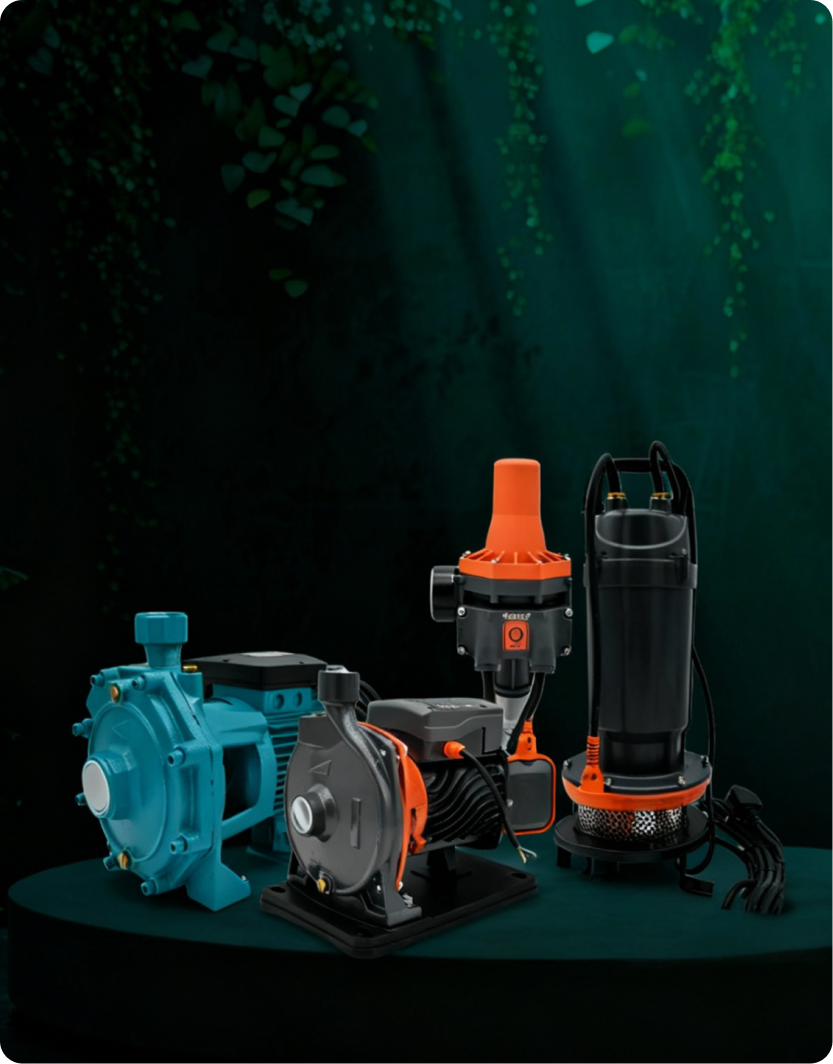
Submersible Multistage Pumps
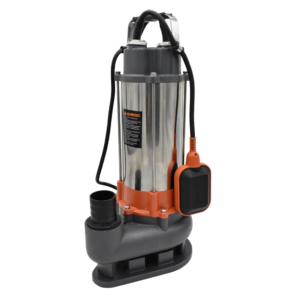
The primary pump type for Saudi borewell irrigation. Multiple impeller stages in series build the high head needed to lift water from deep aquifers. Motor and pump assembly operate fully submerged — no priming needed, cooled by surrounding water.
Typical Specification
4″, 6″, or 8″ bore sizes. 50–500m head range. 3–100 m³/h flow depending on bore diameter.
Centrifugal Surface Pumps
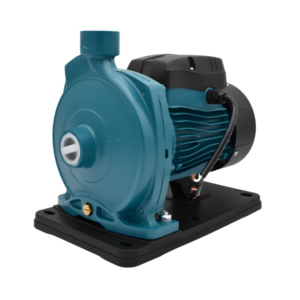
Used where water is accessible at or near the surface open canals, storage tanks, or shallow open wells. Lower cost and easier to maintain than submersibles, but limited to about 6–8 meters suction lift before cavitation becomes a problem.
Typical Specification
Self-priming models for up to 8m suction head. Wide flow range suitable for field-to-tank transfer or surface canal pumping.
Booster Pump Systems
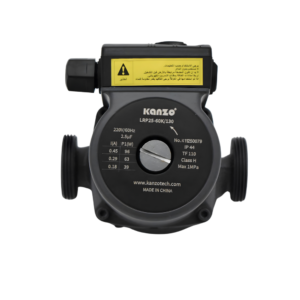
Add or maintain pressure in existing water distribution networks. Essential for drip irrigation where emitter performance depends on consistent inlet pressure typically 1.0–2.5 bar at the field end. Also used in farms where storage tanks feed gravity-distributed systems but pressure is insufficient for modern drip lines.
Typical Specification
Pressure range 1.5–6 bar. Flow sized to peak irrigation zone demand. VFD-controlled models maintain constant pressure as zones open and close.
Solar-Powered Pump Systems
Increasingly the practical choice for remote Saudi farms far from grid infrastructure. DC submersible or AC-inverter systems powered by photovoltaic panels. The variable power input from solar requires pumps selected for wide operating range or paired with battery/grid backup for consistent output.
Typical Specification
3–45 kW solar arrays. DC or AC pump motors. Daily yield depends on panel capacity, irradiance, and pump efficiency at partial load.
Sizing an Agricultural Pump , The Calculation Most Farmers Skip
The two numbers that determine pump selection are flow rate (how much water you need) and total head (how hard the pump must work to deliver it). Most farmers know roughly how much water their farm needs. Far fewer have actually calculated the total head — and that’s where undersized or undersized pumps come from.
Step 1: Calculate Your Flow Requirement
Start with your irrigated area and crop type. A practical rule for Saudi drip-irrigated dates is 4–6 liters per tree per day in summer. For field crops like wheat or alfalfa under sprinkler irrigation, peak demand can reach 6–8 mm per day across the field , equivalent to 60–80 m³ per hectare per day.
Convert daily demand to hourly pump rate based on your planned operating hours. If your system runs 10 hours daily and your farm needs 200 m³/day, your pump needs to deliver at least 20 m³/h , plus a 15–20% margin for friction losses in the distribution network and peak demand variation.
Step 2: Calculate Total Dynamic Head
Example Calculation
200-Hectare Date Farm — Al-Qassim Region, 90m Borewell
- Static water level : 90m below surface (seasonal low — design condition)
Always use lowest seasonal water table, not current reading
- Rise to tank : 8m above surface level
Discharge tank elevation above wellhead
100m rising main at 25 m³/h — Darcy-Weisbach calculation
- Safety margin : +18% (20m)
Accounts for aquifer drawdown, pipe wear, summer temperature effects
- Total Dynamic Head : 90 + 8 + 6 + 20 = 124m TDH
Pump must deliver design flow at this head — not just lift water to surface
- Required pump spec : 25 m³/h @ 124m head — 6″ bore submersible, 11 stages typical
For the complete methodology on flow rate and head calculations , including pipe friction tables and minor loss coefficients , refer to our detailed pump selection guide. Agricultural borewell calculations follow the same principles as industrial systems, with the addition of aquifer drawdown correction.
Matching Pump to Irrigation System
The pump doesn’t just need to lift water , it needs to deliver it at the pressure the irrigation system requires. This is where many selections fail: the pump lifts water fine but the pressure at the drip emitters or sprinkler heads is too low for even distribution.
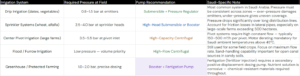
Water Quality in Saudi Agricultural Zones
This is the section most pump selections ignore and the one that causes the most premature failures. Saudi groundwater used for irrigation is almost never clean. It ranges from mildly mineralized to highly brackish, and the solids content varies from clear to visibly sand-laden depending on the aquifer formation and borewell condition.
1. Sand Content : The Impeller Killer
Fine silica sand in borewell water is the number one cause of premature wear in Saudi agricultural submersible pumps. Standard cast iron impellers in sand-laden water can show significant wear after just 200–400 operating hours — well within the first irrigation season. The solution isn’t more expensive pumps — it’s the right pump material for the actual water quality.
For water with visible sand or TDS from silica-forming aquifers: specify stainless steel (304 minimum, 316 for higher salinity) or hardened bronze impellers. Add a properly sized sand screen at the borewell intake typically 0.5mm slot size for fine sand and consider a sand separator above the wellhead for water with heavy sediment loads. For severely sandy boreholes, sand-handling submersible pumps with hard chrome impellers and tungsten carbide shaft bearings are the durable choice.
2. Salinity and Corrosion
High TDS and chloride content in Saudi groundwater (common in Eastern Province and coastal regions) accelerates corrosion in standard pump materials. For water with TDS above 2,000 mg/L or chloride above 500 mg/L, standard 304 stainless is marginal 316L stainless steel minimum for wetted components, with duplex stainless recommended for long-term reliability in high-chloride service.
3. Temperature and Scaling
Saudi groundwater used for irrigation is often warm — 25–35°C from deep aquifers. At these temperatures combined with high calcium and magnesium content, scaling in pump passageways and distribution lines becomes significant over time. Regular acid flushing of the system and pump inspection every 1,000 operating hours helps manage this in high-hardness water areas.
4. Kanzotech Field Recommendation
Before purchasing any agricultural pump, request a water analysis from your region’s Ministry of Environment, Water, and Agriculture (MEWA) extension office or conduct a basic field test for TDS, pH, and sand content. A SAR 200 water test can prevent a SAR 15,000–40,000 premature pump replacement within the first season. Our team can review your water quality data as part of the selection process.
Solar-Powered Pumping in Saudi Agriculture
Solar pumping is no longer an experimental option for Saudi farms — it’s become the practical standard for any agricultural operation more than 5–10 km from reliable grid power. The economics have shifted decisively: photovoltaic panel costs have dropped 80% in the past decade, and with Saudi Arabia’s average 8–9 peak sun hours per day, a properly sized solar pump system delivers water at a fraction of the diesel cost it replaces.
Solar Pumping in Saudi Arabia — Key Facts
Why Solar Has Become the Default for Remote Farms
Saudi Arabia receives among the highest solar irradiance levels in the world particularly in Tabuk, Al-Jouf, and the Najd plateau. A 10 kW solar array in these regions can power a submersible pump for 8–10 hours daily with zero fuel cost. Over a 20-year system life, the total cost of ownership is typically 60–75% lower than equivalent diesel pumping.
- 8–9 Peak sun hours/day in most Saudi agricultural regions
- 70% Operating cost reduction vs diesel over system lifetime
- 15–20yr Typical panel and system lifespan with proper maintenance
What Changes When Selecting a Pump for Solar Operation
Solar power output varies through the day , low at dawn, peak at midday, declining in late afternoon. This means the pump’s flow and head output also varies unless the system includes power conditioning. There are two approaches, and the choice depends on your irrigation schedule and water storage setup.
Direct solar pumping (no battery): The pump runs when the sun shines and fills a surface storage tank during daylight hours. Irrigation then runs from stored water on a schedule. Simpler and lower cost. Requires a storage tank sized to hold one day’s irrigation water, and a pump selected to fill that tank in available sun hours , typically 6–8 hours at peak output.
Inverter-controlled AC systems: A solar inverter converts variable panel output to stable AC power for a standard submersible motor. More consistent pump output, compatible with standard three-phase motors. More complex and higher upfront cost, but allows irrigation during pumping rather than requiring storage. Increasingly the preferred approach for drip-irrigated farms where irrigation timing precision matters.
“The pump that worked last winter is not necessarily the pump that will work next August. In Saudi agriculture, you size for the hardest day of the year , not the easiest.”
— Kanzotech Pumps
Frequently Asked Questions
1.What is the best pump for a deep borewell in Saudi Arabia?
For depths beyond 30 meters — which covers most Saudi agricultural boreholes a multistage submersible pump is the standard answer. The number of stages determines how much head the pump can generate. For a 100m borewell, you typically need 8–12 stages depending on the impeller design. For sand-laden water, specify stainless steel impellers and shaft bearings rated for abrasive service. A 4″, 6″, or 8″ bore submersible is chosen based on the borehole casing diameter.
2.How much does an agricultural pump cost in Saudi Arabia?
Entry-level submersible pumps for shallow borewells (30–50m) start around SAR 1,500–3,500. Mid-range stainless steel multistage units for 80–150m depth run SAR 4,000–12,000 depending on flow rate and motor size. High-capacity systems for center pivot irrigation or large farms can reach SAR 25,000–60,000 including controls and installation. The more useful number is lifecycle cost — a cheaper pump with cast iron impellers in sandy water may need replacing every 2–3 seasons, while a stainless unit runs 8–12 years with routine maintenance. See the full range on our water pump product page
3.Can agricultural pumps run on solar power?
Yes, and for remote Saudi farms this is increasingly the most cost-effective option. A 7.5–15 kW solar array can power a borewell submersible pump for 7–9 hours daily during the main growing season. The key selection point is ensuring the pump motor is compatible with the inverter output — DC motors for direct solar systems, standard three-phase AC motors for inverter-controlled systems. Solar pumping requires oversizing the pump slightly to compensate for reduced output during low-irradiance periods (early morning, late afternoon, overcast days).
4.What is the average lifespan of an agricultural pump in Saudi Arabia?
In clean water conditions with proper installation and annual maintenance: 8–15 years. In Saudi agricultural conditions with brackish or sand-laden borewell water and summer heat exposure: 4–8 years for standard specification pumps. With proper material selection (316L stainless, sand-rated bearings) and a correctly installed sand screen: 8–12 years is achievable. The biggest life-shortening factor is running the pump while it’s already cavitating — which happens when water table drops below design assumption. Annual flow testing at peak summer identifies this before it causes damage.
5.How do I know if my pump needs maintenance?
Four practical indicators:
(1) Flow rate drops more than 10–15% below what you measured when the system was new or recently serviced measure by timing how long it takes to fill a known volume.
(2) The pump motor draws more current than normal at the same flow measured with a clamp meter at the control panel.
(3) Unusual vibration or noise from the borewell casing.
(4) Water appears more turbid than usual, indicating impeller wear is releasing more fine particles. Annual professional inspection every 1,000 operating hours catches wear before it becomes failure. Kanzotech offers on-site service across Saudi agricultural regions.
Pre-Selection Checklist for Saudi Farmers
Agricultural Pump Selection Checklist
Water source identified and depth measured at summer low level
Dynamic water level during peak extraction — not static level at rest
Water quality tested — TDS, sand content, pH, chloride, hardness
Determines material specification for impellers, shaft, and seals
Daily water requirement calculated based on farm area and crop type
At peak summer demand, not average seasonal demand
Total Dynamic Head calculated — water level + surface rise + friction + 18% margin
Using seasonal low water table as design basis
Irrigation system pressure requirement confirmed at field end
Drip: 0.8–1.5 bar at emitters. Sprinkler: 2.5–4.0 bar at heads.
Power source determined — grid, diesel, or solar
For solar: array size calculated for peak summer output and daily m³ requirement
Sand screen specified for borewell with any visible sediment
0.5mm slot size for fine quartz sand typical in Saudi aquifers
Motor protection confirmed — IP68 for submersibles, TEFC Class F for surface motors
With 10–15% motor derating for outdoor operation above 40°C ambient
Conclusion : Getting Water to Your Farm Reliably, Every Season
Saudi agriculture operates under water conditions that have no margin for equipment failure during peak season. When a pump fails in July on a date farm, you don’t have days to wait for a replacement. The trees that were irrigated yesterday need water today.
The farms that avoid this situation don’t get lucky with their pumps they make a deliberate selection at the start that accounts for the worst conditions they’ll face, not the best. They know their summer water table depth. They’ve tested their water quality. They’ve calculated the pressure their drip system needs at the far end of the longest lateral, not just at the pump outlet.
That level of preparation is what Kanzotech Pumps helps with for agricultural customers across Saudi Arabia from date farms in Al-Qassim and Al-Jouf to vegetable production in the Eastern Province and Tabuk . The selection process starts with your actual site conditions, and the goal is a system that runs reliably through the summer peak without needing emergency attention.
For the flow and head calculation methodology in detail, the full pump selection guide covers the engineering fundamentals. For industrial and manufacturing applications, see the industrial pump selection guide . For the complete range of submersible and agricultural pumps available in Saudi Arabia, the Kanzotech product catalog covers models from standard borewell units to solar-integrated systems.





 September 12, 2026
 HYZAM KENZ



Comments
No comments yet. Be the first to comment!