Introduction
A fire pump system is one of the few pieces of building infrastructure that can go completely unused for the entire life of a building, and still be the single most important piece of equipment in it the one time it’s actually needed. That’s exactly why fire pump compliance isn’t a one-time installation checkbox. It’s an ongoing obligation covering design, testing, maintenance, and documentation, and it’s one facility managers are directly responsible for long after the installing contractor has moved on to the next project.
This guide covers what facility managers actually need to know about fire pump systems, the standard they’re built around, the four main types of fire pumps and when each one applies, and the compliance obligations that don’t end once a system passes its initial inspection.
Why Fire Pump Compliance Isn’t Optional
Why it matters: Fire pump systems are life-safety infrastructure, and they’re treated that way by regulation. In Saudi Arabia, fire protection systems fall under Saudi Building Code SBC 801 and require approval from Saudi Civil Defense, with the Kingdom’s fire protection framework built around the same internationally recognized standard that governs fire pump design, installation, and testing almost everywhere else in the world: NFPA 20.
Unlike most building systems, a fire pump’s performance can’t really be judged by everyday use, it sits idle until an emergency, at which point there’s no opportunity to discover a problem and fix it. That’s the reason fire pump compliance is structured around continuous testing and documentation rather than a single approval at handover.
The Standard Behind It: NFPA 20
Why it matters: NFPA 20, the Standard for the Installation of Stationary Pumps for Fire Protection, is the technical foundation almost every fire pump compliance requirement traces back to, whether directly referenced or adopted through a local building code. First issued in 1899 and continuously updated since, it defines not just how fire pumps must be built, but where and how they’re installed, connected, tested, and documented.
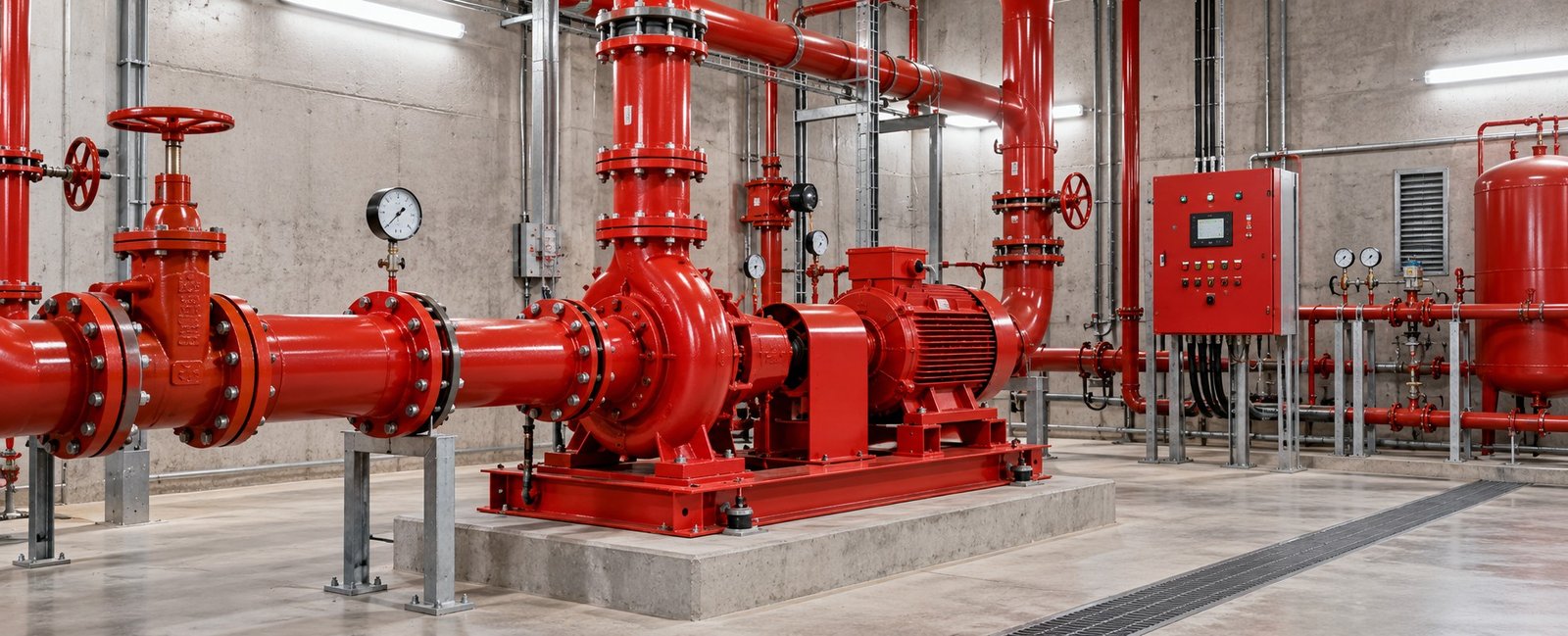
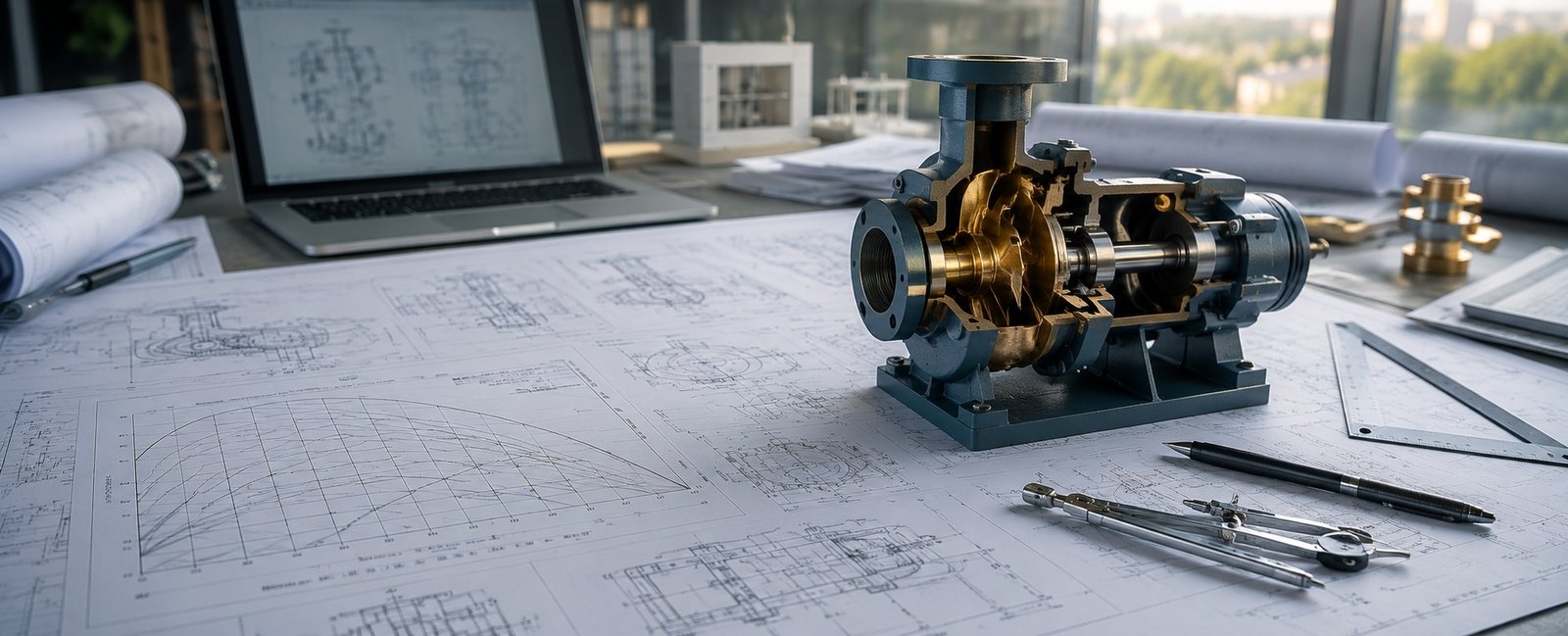
NFPA 20 covers centrifugal, vertical turbine, and positive displacement pumps, and specifies acceptable pump configurations, driver types, pump room construction requirements, piping and valve arrangements, and testing protocols. It’s the reference point for almost every other requirement covered in this guide.
The 4 Types of Fire Pumps
Why it matters: Fire pumps are generally categorized into four main configurations under NFPA 20, and each one suits a different set of building conditions.
- Horizontal split-case pumps are the most common configuration for large commercial and industrial buildings, offering high flow and pressure capacity with a design that allows the pump casing to be opened for maintenance without disturbing the piping connections, a genuine advantage for ongoing service.
- Vertical in-line pumps are close-coupled units with the motor mounted vertically above the pump, requiring up to 30 percent less floor space than an end suction pump of similar capacity. They’re well suited to smaller commercial buildings, data centers, and retrofit projects with limited plant room space, typically handling flows under 1,000 gallons per minute.
- End suction pumps take water in horizontally through the center of the pump and discharge vertically, a straightforward, widely used configuration for small to mid-sized commercial applications.
- Vertical turbine pumps are required whenever a building’s water source sits below ground level, a reservoir, well, or underground storage tank. These pumps position the motor above ground, connected by a shaft and impeller assembly submerged into the water source below, making them the standard choice for any facility drawing water from a below-grade or static source rather than a pressurized municipal supply.
Choosing the Right Driver: Electric, Diesel, or Steam
Why it matters: Separate from pump configuration, NFPA 20 also defines three acceptable driver types, and this choice directly affects a facility’s backup power and compliance planning.
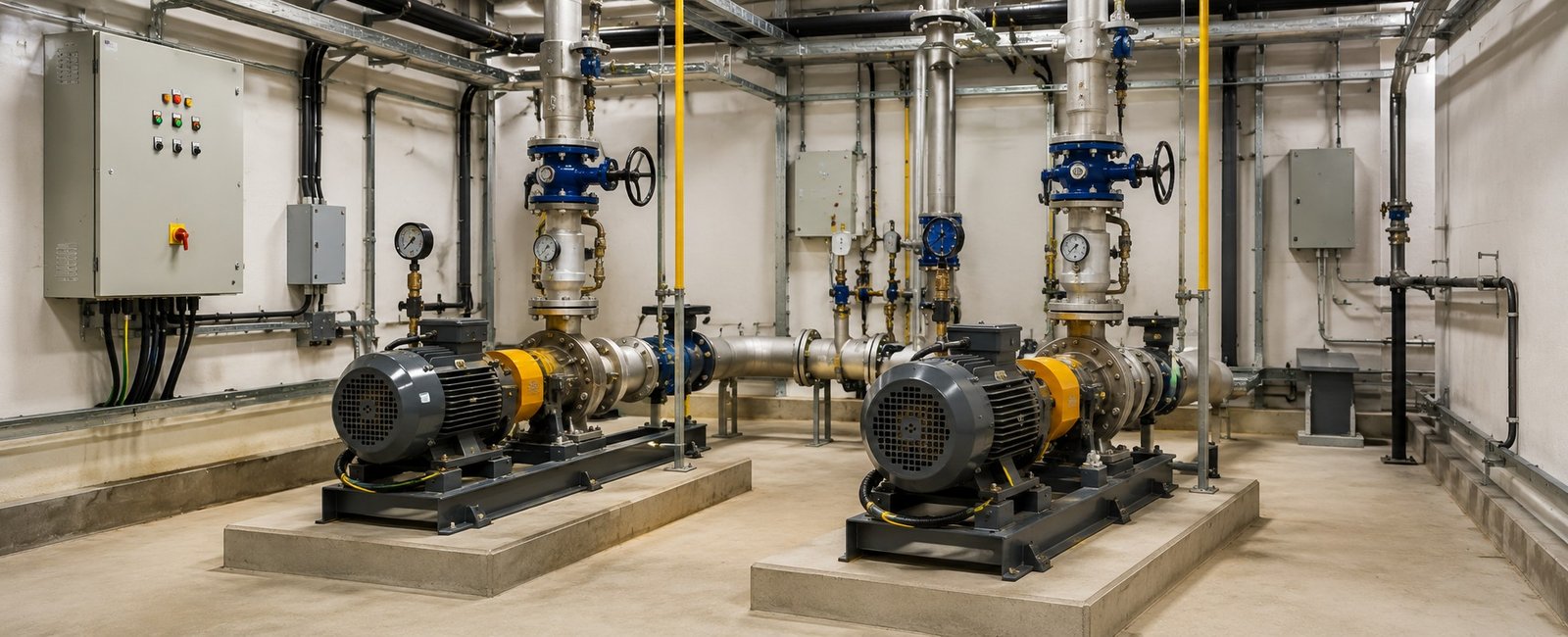
Electric motors are the most common driver, valued for cost-effectiveness, compact footprint, and lower maintenance requirements, but they require a reliable power source, typically a dual utility feed or emergency generator backup, for critical applications. Diesel engines provide backup capability independent of the building’s electrical supply, common where power reliability is a genuine concern, but they require a larger, separately ventilated enclosure to accommodate fuel storage and starting batteries, along with more intensive mechanical maintenance. Steam turbines are uncommon today, found mainly in older industrial facilities or power plants where steam is already generated on-site for other processes.
Pump Room Requirements Under NFPA 20
Why it matters: Where and how a fire pump is housed is as tightly regulated as the pump itself, building directly on the same access and construction principles covered in our guide on pump rooms that don’t cause headaches, but with fire-specific requirements layered on top.
Fire pump rooms must be easily accessible, properly ventilated, and built from fire-resistive materials, with high-rise installations often requiring separation walls carrying a minimum two-hour fire rating. Suction and discharge piping must be sized to minimize friction loss and designed to avoid air pockets, and control valves, check valves, flow meters, and test headers are required throughout to support both isolation and ongoing testing.
Critical Design Requirements Facility Managers Should Know
Why it matters: A handful of NFPA 20 requirements are specific enough, and important enough, that facility managers should know them directly, not just leave them to the original installer.
- Fire pumps must be specifically listed for fire pump service, certified by an accredited testing body such as UL or FM Global. A standard commercial or industrial pump, even a high-quality one, doesn’t meet this requirement unless it carries this specific listing.
- Thermal overload protection is prohibited on fire pump motors. This is a detail that surprises facility managers used to standard motor protection practice: a fire pump must be allowed to keep running even if it’s overheating, because stopping the pump during an actual fire event would be far more dangerous than motor damage.
- A circulation relief valve is required to prevent overheating during churn conditions, when the pump is running against a closed system with no flow.
- Maximum pump horsepower cannot exceed the driver motor’s nameplate rating by more than 15 percent, a specific engineering limit built into the sizing and selection process.
Testing and Maintenance Obligations
Why it matters: NFPA 20 governs design and installation. NFPA 25, the companion standard for inspection, testing, and maintenance of water-based fire protection systems, governs everything that happens after a fire pump is installed, and this is where ongoing facility management responsibility actually sits.
Fire pump systems require a structured testing cadence, typically including weekly no-flow churn testing to confirm the pump starts and runs correctly, and annual full-flow performance testing measured against the pump’s certified performance curve, with results documented and compared to the manufacturer’s original acceptance test data. Facility managers are responsible for maintaining this testing schedule and the documentation behind it, not just for the pump passing its original commissioning test years earlier.
What This Means for Facility Managers Specifically
Why it matters: Fire pump compliance is a continuous facility management responsibility, not a one-time installation milestone.
- Maintain a testing and documentation schedule, not just for weekly and annual tests, but for the acceptance test report itself, kept on file as the baseline every future test gets measured against.
- Confirm pump listing and driver configuration match current facility needs. A building’s power reliability, water source, or occupancy can change over a facility’s life, and a driver or pump configuration selected years ago should be periodically reassessed against current conditions.
- Work with Civil Defense-approved installers and testing providers, given that fire protection systems require ongoing regulatory approval, not just an initial sign-off.
- Track performance degradation over time. A pump testing at 125 percent or more of its catalog flow rating, or showing declining performance against its certified curve, needs investigation before it becomes a compliance failure during an actual emergency.
Practical Compliance Checklist
- Confirm your fire pump carries the correct fire pump service listing (UL/FM) for its configuration and driver type.
- Verify pump room construction meets NFPA 20’s fire-resistive and access requirements, including two-hour separation walls where required for high-rise installations.
- Maintain a weekly churn test and annual full-flow test schedule, with results documented against the original acceptance test data.
- Confirm thermal overload protection has not been added to the fire pump motor, and that a circulation relief valve is in place.
- Review driver type and backup power arrangements against current building power reliability and occupancy.
- Keep all testing, maintenance, and acceptance documentation on file and readily accessible for regulatory review.
Conclusion
Fire pump compliance is built around a standard, NFPA 20, that governs everything from pump configuration and driver selection to pump room construction and motor protection requirements, and it doesn’t end once a system is installed and approved. NFPA 25’s ongoing testing and maintenance obligations mean fire pump compliance is a continuous facility management responsibility, one where the four pump configurations, horizontal split-case, vertical in-line, end suction, and vertical turbine, each suit different building conditions, and where a handful of specific design requirements, no thermal overload protection, correct fire pump listing, proper circulation relief, matter enough to track directly rather than assume the original installation got right and left alone.
Your next steps:
- Confirm your facility’s fire pump configuration and driver type match its current water source and power reliability conditions.
- Review your testing and documentation schedule against NFPA 25’s ongoing maintenance requirements.
- Explore Kanzotech’s industrial pump range and read our guide on pump rooms that don’t cause headaches for related plant room specification guidance.
Managing fire pump compliance or planning a system upgrade for your facility? Contact Kanzotech Pumps to discuss your requirements.



 September 11, 2026
 HYZAM KENZ





Comments
No comments yet. Be the first to comment!