




Specifying Pumps for Saudi Buildings: A Guide for Architects & MEP Consultants


Introduction
A pump specification written loosely at design stage becomes someone else’s problem at procurement stage, usually in the form of an RFI, a substitution request, or a change order once the gap between what was specified and what the building actually needs becomes obvious. Getting pump specification right early is one of the more consequential, and more overlooked, technical decisions an MEP consultant makes on any project.
This guide walks through how to approach pump specification systematically, from matching pump type to application, through calculating head and flow correctly, to writing a specification that holds up through procurement and commissioning without generating avoidable back-and-forth.
Why Pump Specification Belongs at Design Stage, Not Procurement Stage
Why it matters: A pump specification finalized late, or left vague enough that “equal or approved” substitutions can drift far from the original design intent, tends to surface problems only once a contractor is already procuring equipment against a tight schedule. Specifying pump type, performance criteria, and materials precisely at design stage closes that gap before it becomes a procurement-stage argument.
Translating Building Type into Pump Category
Why it matters: The first specification decision, domestic, commercial, or industrial grade, sets the baseline for everything that follows, and getting this categorization wrong early tends to compound through every subsequent decision.
- Domestic-grade specification suits standalone villas, low-rise residential, and smaller-scale applications where demand is relatively predictable and continuous duty cycles are less intensive.
- Commercial-grade specification applies to mid-to-high-rise residential towers, hotels, retail, and mixed-use developments, where higher duty cycles, larger flow rates, and more demanding redundancy requirements come into play.
- Industrial-grade specification is required for manufacturing facilities, process applications, and continuous-duty operations where performance consistency under sustained load matters more than in a standard building context. Our guide on industrial water pump solutions for manufacturing facilities covers this category in more depth.
Common mistake: Specifying a domestic-grade pump category for a project that will actually see commercial-level duty cycles, undersizing not on flow and head alone, but on the pump’s ability to sustain that performance under continuous daily operation.
Matching Pump Type to Application
Why it matters: Beyond grade, pump type needs to match the specific application it’s serving. Specifying the wrong type entirely, rather than just the wrong size, creates problems no amount of correct sizing can fix.
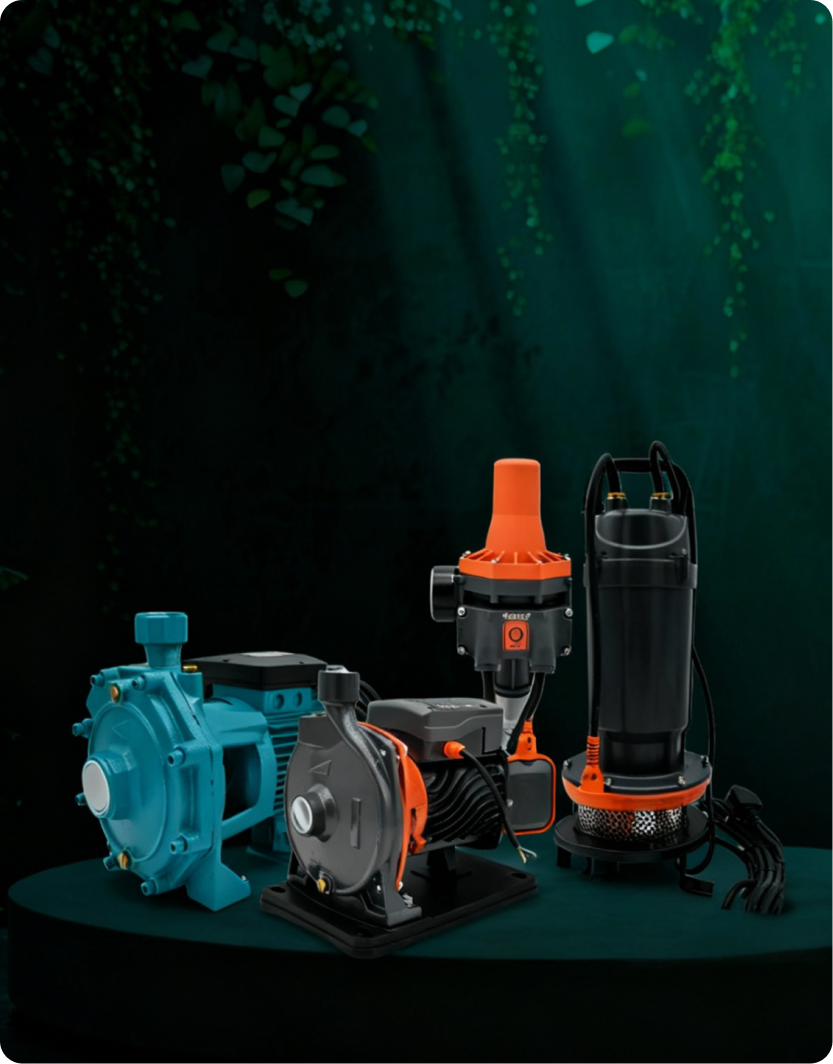
- Peripheral pumps suit low-flow, moderate-pressure domestic applications where simplicity and compact installation matter.
- Centrifugal pumps are the general-purpose workhorse for most standard water supply applications across both domestic and commercial contexts.
- Multi-stage centrifugal pumps are specified where higher pressure, not just higher flow, is required, common in taller buildings or applications needing to overcome significant elevation or system resistance.
- Jet pumps suit specific well or borehole-fed applications where suction lift characteristics matter.
- Submersible pumps are specified for below-grade or fully submerged applications, sump systems, wells, or lower-level water sources.
- Circulation and booster pumps maintain consistent pressure and hot water delivery across a distribution system, a near-universal specification requirement in multi-floor residential and hospitality projects.
- Vertical multi-stage pumps suit space-constrained plant rooms needing high-pressure performance without a large horizontal footprint, common in commercial-grade installations.
- Submersible sewage pumps are specified for wastewater and dewatering applications requiring solids-handling capability standard clean-water pumps aren’t built for.
- End suction centrifugal pumps are the standard specification for industrial-grade continuous duty applications requiring robust, field-proven performance at scale.
Best practice: Specify pump type based on the actual physical and operational conditions of the application, suction lift, elevation, duty cycle, solids content, rather than defaulting to whichever type was used on a previous, possibly dissimilar, project.
Calculating Head and Flow Correctly at Design Stage
Why it matters: Every specification decision downstream of this calculation is only as accurate as the head and flow figures it’s based on, and this is the single most common point where an early, rough estimate gets carried forward without being revisited as design details firm up.
Our guide on understanding pump performance curves covers how to read and apply manufacturer performance data against a system’s actual operating point, rather than specifying against a general horsepower assumption. At design stage specifically, this means calculating total dynamic head, accounting for elevation change, friction loss, and fixture-end pressure requirements, against projected peak flow demand, then revisiting that calculation any time floor count, fixture count, or system layout changes materially during design development.
Common mistake: Calculating head and flow once, early in design, and never revisiting it as the building’s fixture count, floor plan, or plumbing layout evolves, leaving the final specification based on outdated assumptions.
Writing Redundancy and Duty/Standby Into the Spec
Why it matters: Redundancy needs to be a specification decision, not an assumption left to whoever procures the equipment later. As covered in our guide on pump rooms that don’t cause headaches, duty/standby configuration is standard practice on commercial and industrial-grade projects, and it needs to be explicit in the specification document, not left implied.
What to include in the spec: Explicit language calling out duty/standby configuration where required, automatic changeover requirements, and any alternation logic needed to ensure both units see even wear over the system’s service life, rather than one pump running continuously while its standby pair sits idle and undermaintained.
Specifying Materials and Certifications in Spec Language
Why it matters: Vague material callouts, “corrosion resistant construction” without a specific material designation, leave too much room for a lower-quality substitution during procurement.
Best practice: Specify exact materials, cast iron with anti-rust treatment, brass impeller, AISI 304 stainless steel shaft, for example, rather than general performance language alone. Pair this with explicit certification requirements, ISO manufacturing certification and SASO compliance where applicable, written directly into the specification rather than assumed as a general quality expectation. This level of specificity is what actually prevents an “equal or approved” substitution from drifting toward a lower-grade product that technically meets the vague version of the spec.
Coordinating Pump Room Requirements With Other Disciplines
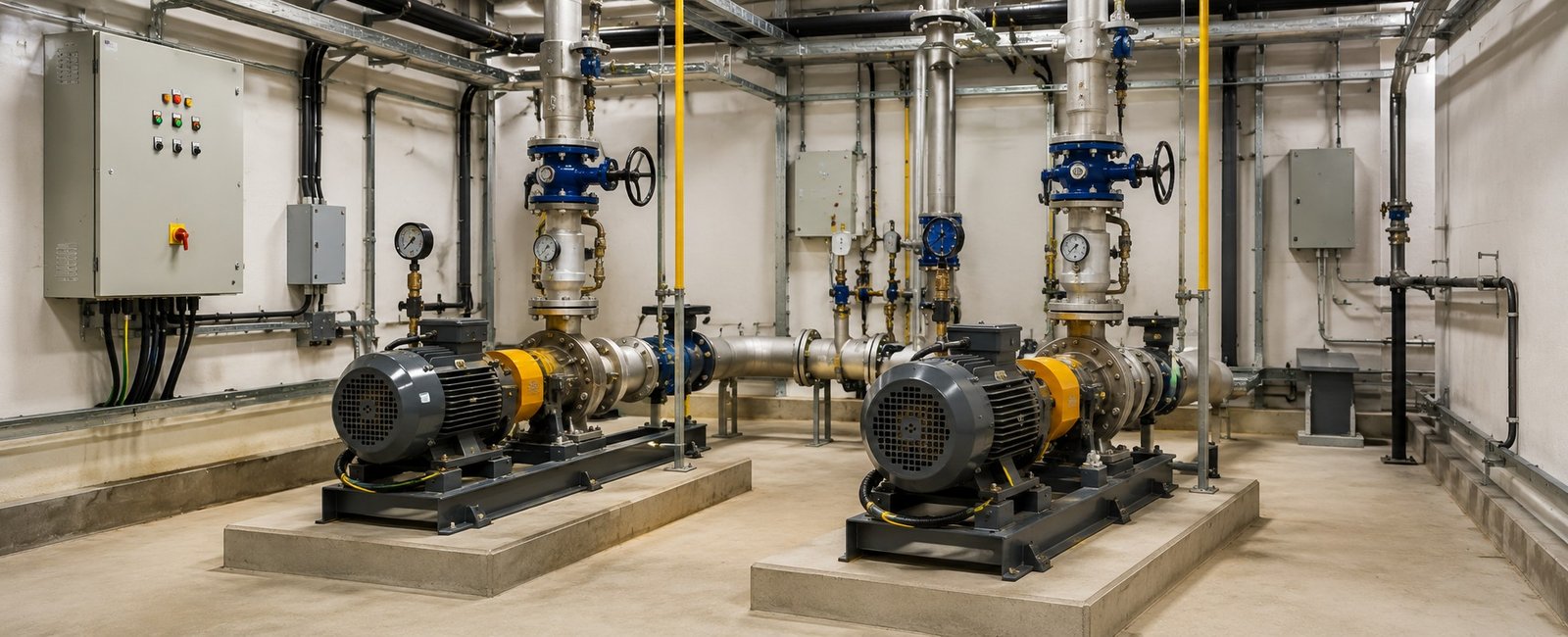
Why it matters: A pump specification that isn’t coordinated with the physical space allocated for it creates exactly the kind of access, ventilation, and drainage problems covered in our guide on pump rooms that don’t cause headaches. This coordination needs to happen at design stage, between MEP, architectural, and structural teams, not discovered during installation.
What to confirm during design coordination: Physical clearance around every specified pump and accessory for maintenance access, floor drainage sized appropriately for the specified equipment, ventilation adequate for the heat load of the specified motors, and vibration isolation requirements communicated to the structural team before slab and wall details are finalized.
A Sample Specification Structure
Why it matters: A well-structured pump specification section reduces ambiguity and gives procurement teams and contractors a precise document to quote against, rather than a general description open to interpretation.
A complete pump specification typically includes:
- Schedule of equipment, listing each pump by tag, type, and application.
- Performance criteria, specific head, flow, and efficiency requirements per unit, referenced against verified performance curve data.
- Materials specification, exact construction materials for pump body, impeller, and shaft.
- Certification requirements, ISO and SASO compliance explicitly stated, with documentation required at submission.
- Redundancy requirements, duty/standby configuration and automatic changeover logic where applicable.
- Accessories, pressure switches, foot valves, and any other required components specified to the same standard as the pump itself.
- Testing and commissioning requirements, including pressure testing and performance verification against the specified curve before handover.
- Warranty and after-sales support requirements, including confirmation of local spare parts availability.
Common Specification Mistakes That Cause RFIs and Change Orders
- Vague material and certification language that leaves room for a substitution to technically comply while falling short of the original design intent.
- Head and flow calculations never revisited after early design assumptions, leaving a mismatch discovered only at commissioning.
- Redundancy assumed rather than explicitly specified, leaving it to procurement or contractor discretion whether duty/standby is actually included.
- Pump room physical requirements uncoordinated with architectural and structural design, discovered only once equipment doesn’t fit the space allocated for it.
- No explicit commissioning or performance verification requirement, leaving no documented check that installed equipment actually matches the specification before handover.
Conclusion
Specifying pumps correctly at design stage is less about picking a horsepower number and more about a systematic set of decisions, matching pump type to application, calculating head and flow against real system conditions, writing explicit redundancy and material requirements, and coordinating physical room requirements with other disciplines before construction begins. A specification built this way holds up through procurement and commissioning without generating the RFIs and change orders that a vaguer document almost guarantees.
Your next steps:
- Review your current pump specification templates against the structure outlined above.
- Confirm head and flow calculations are being revisited as design details firm up, not left from early assumptions.
- Explore Kanzotech’s domestic, commercial, and industrial pump ranges for verified performance data to support accurate specification.
Working on a pump specification for a Saudi Arabia project? Contact Kanzotech Pumps for technical support and performance data to reference in your specification documents.








Comments
No comments yet. Be the first to comment!