



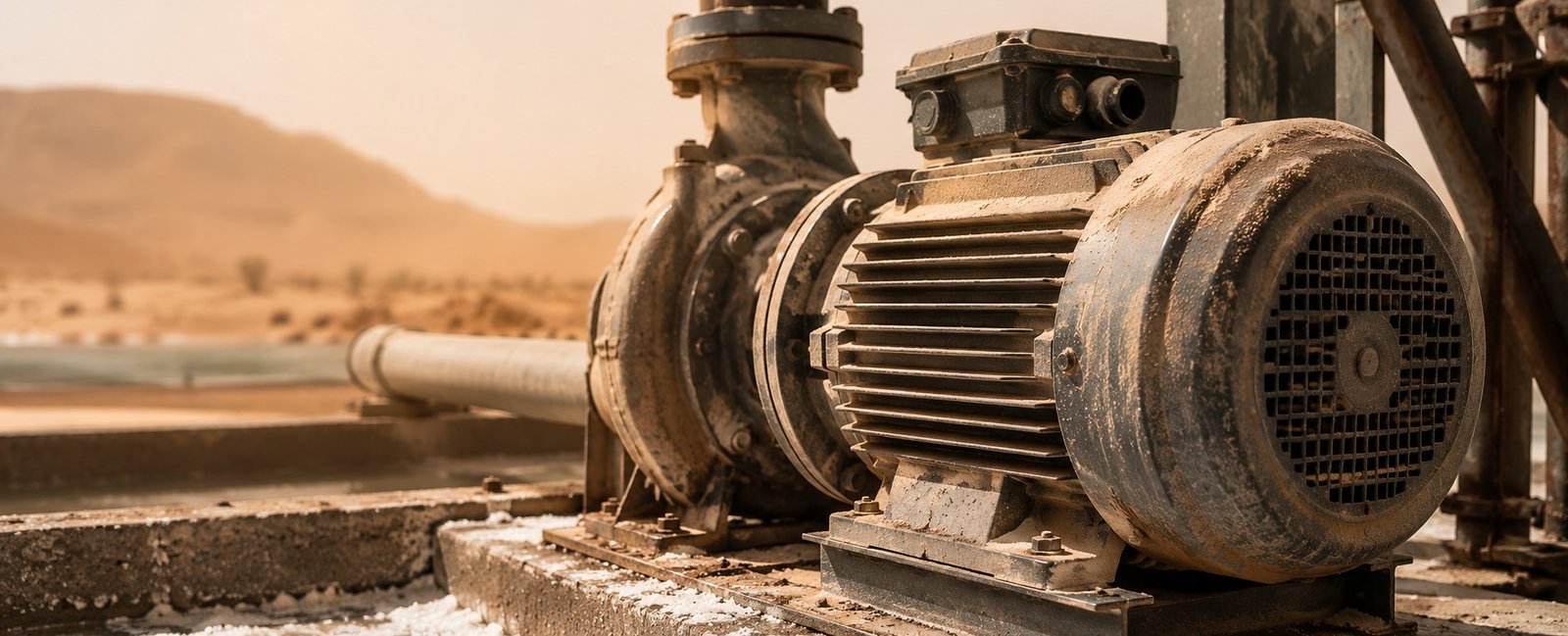
Industrial Water Pump Solutions for Manufacturing Facilities


Introduction
A production line doesn’t stop because someone forgot to order more raw material. More often than plant managers like to admit, it stops because a pump quietly failed somewhere in the background, cooling water stopped circulating, a boiler feed pump lost pressure, or an effluent line backed up faster than anyone expected. None of that shows up on a production schedule until it’s already cost a shift.
Manufacturing facilities rely on water pumps in more places than most people outside the plant ever notice, and unlike a residential or even commercial building, industrial water systems usually run continuously, under harsher conditions, with far less tolerance for downtime. This guide walks through where pumps actually show up on a factory floor, what changes when you’re buying for industrial use rather than a villa or office block, and what industrialists across Saudi Arabia’s growing manufacturing sector should actually be asking before they commit to a system.
What “Industrial Water Pump Solutions” Actually Covers
It’s a broad phrase, and that’s partly the point, a manufacturing facility rarely needs just one pump doing one job. A single plant might run cooling water pumps for machinery, a completely separate system for boiler feed, another for wastewater, and a fire protection system sitting on standby the whole time. “Solution” here means the whole configuration working together, not a single unit picked off a shelf.
That distinction matters because it changes how you shop. Buying an industrial pump in isolation, without mapping it against everything else running on the same site, is how facilities end up with mismatched capacity in one area and unnecessary redundancy in another.
Where Pumps Actually Show Up on a Manufacturing Site
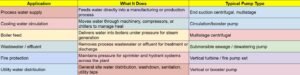
Most facilities are running several of these simultaneously, often on completely different maintenance schedules and criticality levels, which is exactly why a facility-wide view matters more here than in almost any other pump application.
What Actually Changes When You’re Buying for Industrial Use
A residential or even commercial-grade pump is built around intermittent use — hours per day, not every hour of every shift. Industrial manufacturing environments ask for something different, and the gap between the two shows up in a handful of specific ways.
Continuous duty rating
Many industrial processes run pumps 24 hours a day, seven days a week, for months between planned maintenance windows. A pump rated for intermittent residential or light-commercial duty simply isn’t built for that load, bearings, seals, and windings wear at a different rate under continuous operation, and the manufacturer’s duty-cycle rating reflects that difference directly.
Material and chemical compatibility
Process water in a manufacturing environment is rarely just water. Depending on the industry, it may carry chemical residues, higher temperatures, abrasive particulates, or corrosive elements that a standard residential pump’s materials were never designed to handle. Impeller and casing material, cast iron, stainless steel, or specialized alloys, needs to match what’s actually running through the system, not just the flow and head numbers.
Redundancy and standby capacity
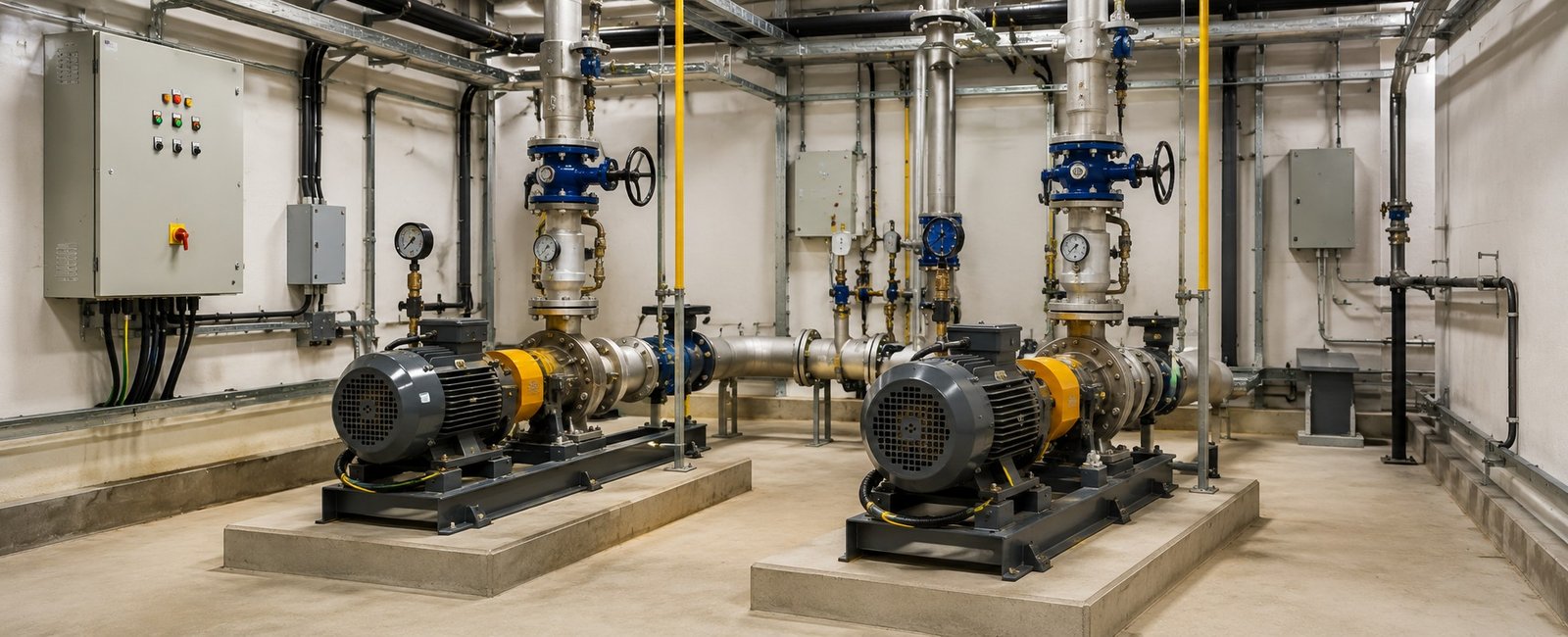
In a home, a failed pump is an inconvenience. In a manufacturing facility, it can mean a halted production line, spoiled batch, or a wastewater system backing up faster than it can be managed. Industrial systems are frequently specified with standby or duty/assist pump pairs precisely so one unit can fail or go down for maintenance without stopping the process it supports.
Monitoring and integration
Larger industrial systems increasingly expect pumps that can integrate with a facility’s existing monitoring or control systems, flagging abnormal vibration, pressure drops, or temperature before a full failure occurs, rather than after.
Industry-Specific Considerations Worth Knowing
“Manufacturing” covers a wide range of actual operating conditions, and the right pump configuration shifts depending on what the facility actually produces.
- Food and beverage: hygiene-rated materials, easy-clean designs, and compliance with food-contact water standards where applicable
- Cement, steel, and heavy industry: abrasion-resistant components for slurry or particulate-heavy water, and higher-temperature tolerance near furnace or kiln operations
- Textile and chemical processing: corrosion-resistant materials for dye baths, treatment chemicals, and process water with variable pH
- Petrochemical and refining: explosion-rated (ATEX-equivalent) motor housings and materials engineered for hydrocarbon exposure
None of this shows up on a basic flow-and-head spec sheet, it’s the kind of detail that only comes up when a supplier actually asks what the facility produces, rather than just what capacity is needed.
Energy Use Is a Bigger Line Item Than Most Facilities Realize
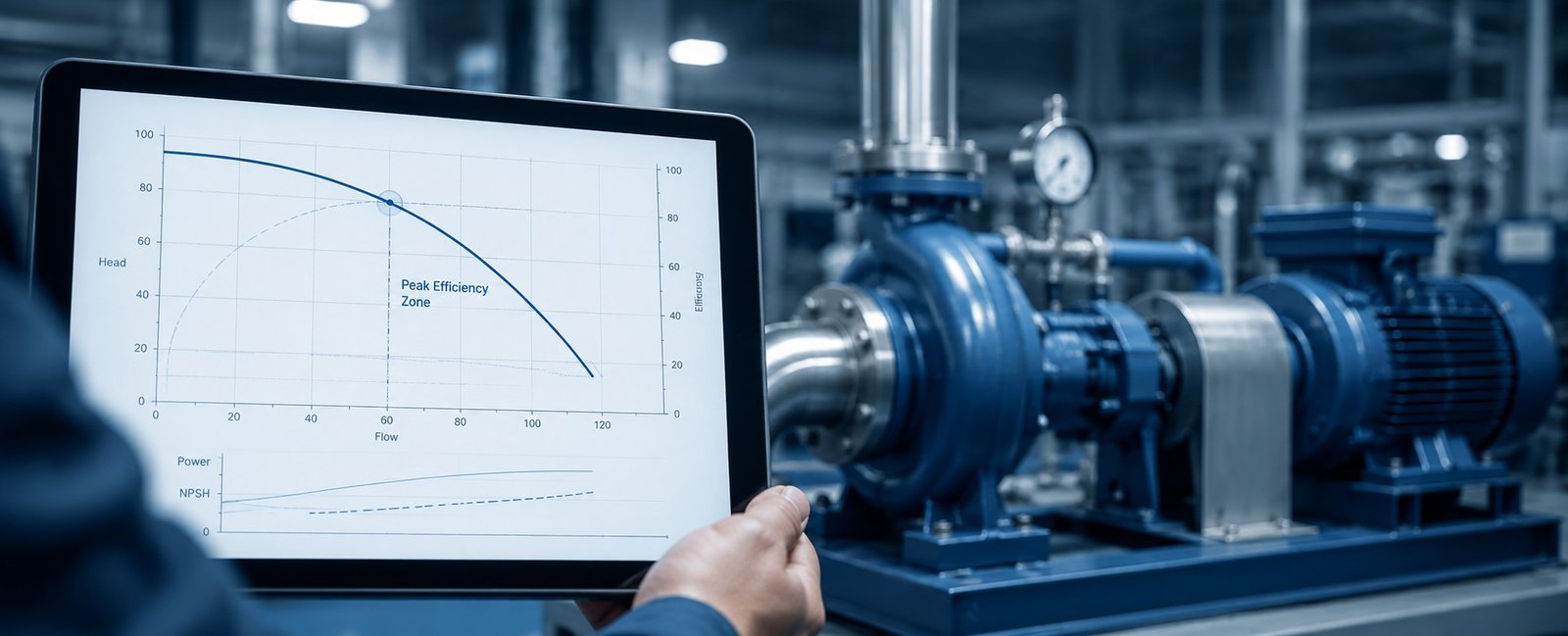
Pumps that run continuously, across multiple systems, for years at a stretch, turn even small efficiency differences into meaningful costs. Saudi commercial and industrial electricity tariffs are generally higher than residential rates and vary by classification and consumption, which makes correctly sized, efficient pumps, rather than oversized units running well below their best efficiency point, a genuine line item on a facility’s operating budget, not just a technical preference.
Pairing pumps with variable frequency drives is increasingly common on larger industrial installations for exactly this reason, running a pump at reduced speed during lower-demand periods cuts power draw more than proportionally, rather than running a fixed-speed pump flat out and throttling the output mechanically.
Reliability Planning: The Part Most Facilities Get to Later Than They Should
Pump failures on a manufacturing site are rarely a surprise in hindsight, they’re usually preceded by warning signs that got logged and then never acted on. A basic reliability plan for industrial pump systems typically covers a few recurring habits:
- Scheduled inspection intervals matched to actual duty cycle, not a generic calendar reminder
- Vibration and temperature monitoring on critical-path pumps, the ones that would stop production if they failed
- A defined standby/spare parts policy for the pumps that can’t wait for a multi-day replacement lead time
- Clear ownership, someone specific responsible for pump reliability, not a task that falls through the cracks between departments
Facilities that treat this as routine maintenance planning, the same way they’d plan for machinery servicing, consistently avoid the unplanned-downtime scenarios that facilities without a plan eventually run into.
Saudi-Specific Requirements for Industrial Buyers
Electrical standard
Most industrial installations in Saudi Arabia run on 380V three-phase power, and pump motors need to be specified and confirmed against the facility’s actual electrical supply before ordering, a mismatch here is one of the more common and entirely avoidable delays in industrial procurement.
SASO certification
Industrial water pumps sold in Saudi Arabia require a SASO Certificate of Conformity, and buyers should confirm current documentation is available for the specific model being purchased, not just the general product line.
Vision 2030 and industrial growth
Saudi Arabia’s continued push to expand domestic manufacturing capacity under Vision 2030 means more facilities are being built or expanded across the Kingdom’s industrial cities and zones. That growth is exactly why planning pump infrastructure early in a facility’s design, rather than retrofitting it after operations begin, increasingly pays off in both cost and reliability.
What to Ask an Industrial Pump Supplier
- Can this pump run continuously at my actual duty cycle, not just its rated maximum?
- What materials are used, and are they compatible with what’s actually running through my system?
- What’s the standard lead time for replacement parts if this pump fails outside a planned maintenance window?
- Is a standby or duty/assist configuration recommended for this application, and why?
- Can you support multiple systems across my facility, cooling, process, wastewater or only one component of it?
A supplier that can only answer for a single pump in isolation, without asking about the rest of the facility’s systems, usually isn’t equipped to plan a full industrial solution, only sell a single part of one.
Where This Fits Into a Broader Facility Plan
If your facility is still under construction or expansion, our guide to water pumps for construction projects covers how dewatering, transfer, and plumbing-support needs are typically phased across a build, relevant groundwork before the permanent industrial systems covered here go in.
For the pump types most common in continuous industrial duty, our end suction pump range and vertical pump range cover process water and pressure-boosting applications directly, while our dewatering pump range applies to wastewater and effluent handling.
If you’re deciding between pump types before specifying a system, our breakdown of booster pump vs. centrifugal pump and our guide to single-stage vs. multistage pumps are useful starting points.
For a sense of budget ranges across pump categories, see our Water Pump Price in Saudi Arabia (2026) guide, or review a real project example in our Hyde Park Tower, Riyadh project spotlight.
Frequently Asked Questions
- What’s the difference between an industrial pump and a commercial pump?
Industrial pumps are typically rated for continuous duty, built with more robust or chemically resistant materials, and specified with redundancy in mind. Commercial pumps are usually built for heavier use than residential units but not necessarily for uninterrupted, round-the-clock operation. - Do I need a standby pump for every system in my facility?
Not necessarily every system, but any pump supporting a process where downtime would halt production, spoil product, or create a safety issue is usually worth pairing with standby or duty/assist capacity. - How often should industrial pumps be inspected?
Inspection frequency should match actual duty cycle and criticality rather than a fixed generic schedule, pumps running continuously on critical processes typically warrant more frequent monitoring than intermittent utility pumps. - Can one supplier handle multiple pump systems across a facility?
Yes, and it’s generally the more efficient approach, coordinating cooling, process, wastewater, and fire protection systems through a single supplier relationship avoids the gaps that come from sourcing each system separately. - What electrical supply do industrial pumps in Saudi Arabia typically need?
Most industrial installations run on 380V three-phase power, though this should always be confirmed against the facility’s actual electrical infrastructure before ordering.
Plan the System, Not Just the Pump
The facilities that avoid unplanned downtime are rarely the ones with the newest equipment, they’re the ones that planned pump capacity, redundancy, and materials around what the process actually demands, rather than buying a single unit and hoping it holds up. Whether you’re expanding an existing plant or building a new facility from the ground up, mapping the full system early is what prevents the 2 a.m. call about a stopped line.
Planning Pump Infrastructure for a Manufacturing Facility?
Share your facility’s processes, duty cycle, and site conditions, and our team will help map the right pump configuration, including redundancy and material recommendations, within 24-48 hours.
- Request a Quote (RFQ form): https://kanzotechpumps.com/#about
- WhatsApp: +966 54 750 9351






Comments
No comments yet. Be the first to comment!