Introduction
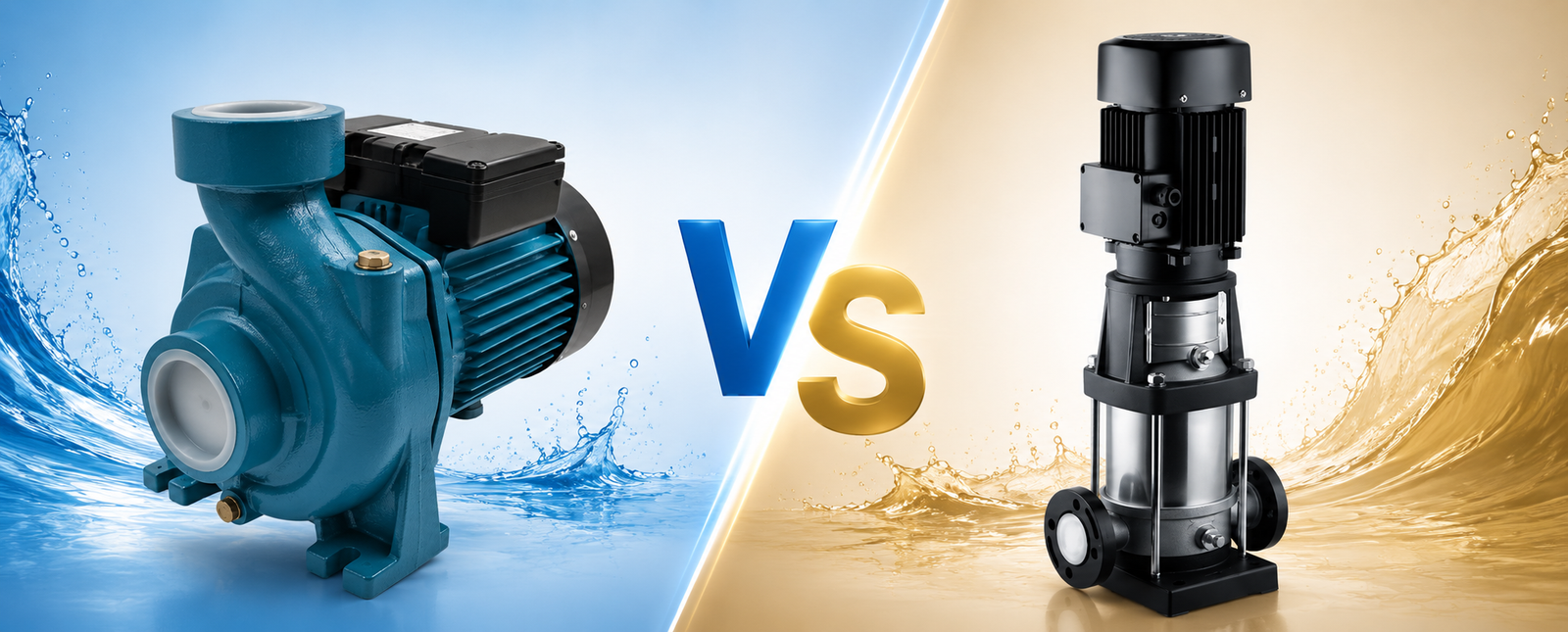
Here’s the thing that trips up even experienced buyers: when someone asks “Booster Pump vs Centrifugal Pump,” they’re actually comparing apples to apple trees.
Let me explain.
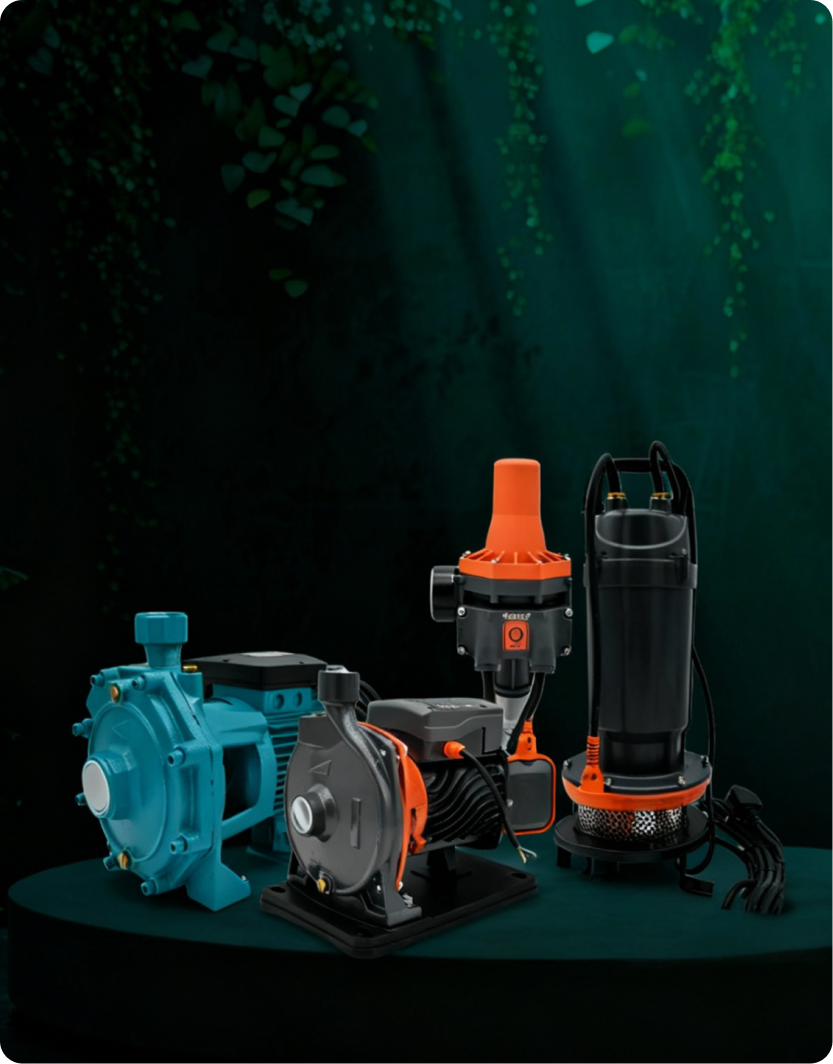
A centrifugal pump is a type of pump , defined by how it moves water (using a spinning impeller to create centrifugal force).
A booster pump is a function ,defined by what it does (increases pressure in a system that already has some flow).
And here’s the part that matters: most booster pumps ARE centrifugal pumps.
So the real question isn’t “which one should I buy?” It’s “do I need to boost existing pressure, or am I starting from scratch?”
I know that sounds like splitting hairs, but in Saudi Arabia’s building codes and water supply systems, getting this distinction wrong costs money. Sometimes a lot of it.
Let’s break down what you actually need to know.
What Is a Centrifugal Pump?
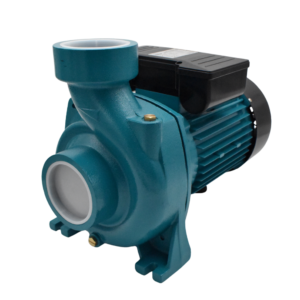
Think of centrifugal pumps as the workhorse of the water pumping world. They use a simple principle: spin an impeller really fast, and the water gets flung outward, creating both flow and pressure.
They come in hundreds of configurations:
- Single stage or multi-stage
- Horizontal or vertical
- Self-priming or standard
- Close-coupled or frame-mounted
You’ll find centrifugal pumps everywhere from massive water treatment plants to the HVAC system in your building.
What they do: Move water from point A to point B, creating both flow (liters per minute) and pressure (bar or PSI).
What they need: A water source with adequate NPSH (Net Positive Suction Head—basically, enough pressure on the inlet side to prevent cavitation).
What Is a Booster Pump?
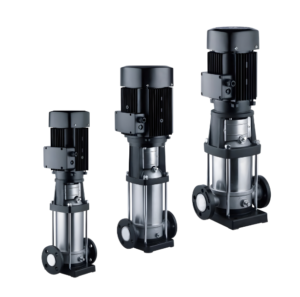
A booster pump is just a centrifugal pump with a specific job: take water that’s already flowing at low pressure and increase that pressure.
Picture this: You’re on the 15th floor of a building in Riyadh. The municipal water supply provides decent pressure at ground level, maybe 2-3 bar. But by the time it climbs 15 floors, there’s barely a trickle coming out of your tap.
That’s where a booster pump comes in. It doesn’t create water supply from nothing. It boosts what’s already there.
What they do: Increase pressure in existing low-pressure systems.
What they need: An incoming water source that already has some pressure (even if it’s just 0.5-1 bar).
The Technical Difference That Actually Matters
Here’s where we get practical.
Operating Principle: Same
Both use centrifugal force. An impeller spins, water accelerates outward, pressure builds up. The physics is identical.
Application: Different
Standard centrifugal pump:
- Draws water from a tank, sump, or reservoir
- Creates pressure from zero (or near-zero) inlet pressure
- Can handle suction lift (pulling water up from below the pump)
- Often operates independently
Booster pump:
- Works on an already-pressurized supply line
- Adds additional pressure to what’s already there
- Cannot create flow if inlet pressure drops to zero
- Operates in series with existing water supply
Think of it this way: a centrifugal pump is like the engine in your car—it creates motion from nothing. A booster pump is like a turbocharger, it amplifies what’s already happening.
Installation: Very Different
Centrifugal pump setup:
- Install at pump room or near water source
- Connect suction line to tank/source
- Ensure proper priming (if not self-priming)
- Size suction pipe to avoid cavitation
- Install foot valve if needed
Booster pump setup:
- Install inline on existing pressurized pipe
- No suction pipe needed—feeds directly from supply line
- Add pressure tank for smooth operation
- Install pressure switch or VFD for automatic operation
- Ensure backflow prevention
Control Systems: Booster Pumps Are Smarter
Standard centrifugal pumps often run continuously or on simple timers.
Booster pumps need intelligence:
- Pressure sensors to detect demand
- Variable speed drives (VFDs) to match output to demand
- Pressure tanks to prevent rapid cycling
- Low-pressure cutoffs to prevent dry running
A quality booster pump system costs more but it saves money by running only when needed and matching speed to actual demand.
When You Need a Centrifugal Pump
Scenario 1: No existing pressure
You have a storage tank at ground level. You need to pump water to various floors. There’s zero pressure in that tank—just water sitting there.
Solution: Centrifugal pump (or multiple pumps in a set).
Scenario 2: Lifting water from depth
Your water comes from a basement sump or underground storage. You need to lift it up and distribute it.
Solution: Centrifugal pump with adequate head capacity.
Scenario 3: Process or irrigation application
You need to move large volumes of water for cooling systems, irrigation, or industrial processes—starting from a reservoir or tank.
Solution: Centrifugal pump sized for flow and pressure requirements.
Real example from Jeddah:
A warehouse facility with rooftop cooling towers needed to circulate 200 cubic meters per hour from a ground-level tank. No existing pressure. Just gravity-fed water in a tank.
They installed two centrifugal pumps (duty/standby configuration). Each pump creates the full 6 bar needed to push water to the rooftop and through the cooling circuit.
This isn’t a boosting application. This is pure pumping work.
When You Need a Booster Pump
Scenario 1: Low municipal pressure at upper floors
You have municipal water supply. Ground floor pressure is adequate (2-3 bar). But floors 8 and above have weak flow.
Solution: Booster pump system to add 3-4 bar to the existing supply.
Scenario 2: Pressure-sensitive equipment
Your reverse osmosis system needs 4-5 bar to operate efficiently. Municipal supply provides 2 bar.
Solution: Booster pump to increase pressure specifically for that equipment.
Scenario 3: Long horizontal runs with pressure loss
You’re pumping water 500 meters across a facility. By the time it reaches the far end, pressure has dropped significantly due to friction loss.
Solution: Booster pump midway to restore pressure.
Real example from Riyadh:
A 20-floor residential building. Municipal supply provides 3.5 bar at the connection point, enough for the first 8 floors, but upper floors had complaints.
Installing individual centrifugal pumps for each zone would have required massive tanks, pumps, and energy consumption.
Instead: A two-stage booster pump system. First stage serves floors 9-14, second stage serves floors 15-20. Each stage adds exactly the pressure needed.
Result: 40% less energy consumption compared to separate pump systems, and consistent pressure throughout the building.
The Saudi Arabia Factor
Here’s what changes the equation in this region.
Municipal Supply Isn’t Always Consistent
In some areas, municipal pressure varies throughout the day:
- 3 bar at 3 AM
- 1.5 bar at peak usage (noon and evening)
- Sometimes drops below 1 bar during high-demand periods
A standard booster pump might work fine at night and struggle during peak hours.
Solution: Variable speed booster systems that adjust to incoming pressure. When inlet pressure drops, the pump speeds up to compensate. When inlet pressure is adequate, it throttles back.
Kanzotech Pumps has seen this scenario dozens of times. The cheap fixed-speed booster pump saves money upfront—then fails during the exact hours when water demand is highest.
Summer Peak Demand Is Brutal
From June to September, water consumption in Saudi Arabia spikes dramatically:
- Air conditioning cooling towers run 24/7
- Landscaping irrigation increases
- Residential usage jumps
If your pump system is barely adequate during winter, it’ll fail during summer.
Always size with a 20-30% margin. It costs a bit more initially. It prevents crisis calls in July.
Water Quality Affects Pump Selection
High TDS (Total Dissolved Solids) water, common in many Saudi groundwater sources, causes scale buildup in pumps.
For booster pumps especially (which often run at higher speeds), this matters:
- Stainless steel or bronze impellers last longer than cast iron
- Regular descaling maintenance becomes essential
- Strainer installation before the booster pump protects the system
Common Mistakes (Expensive Ones)
Mistake 1: Installing a Booster Pump Where You Need a Centrifugal Pump
Scenario: Customer has an unpressurized storage tank. They install a booster pump because “it’s cheaper and smaller.”
Problem: Booster pumps aren’t designed to create flow from zero pressure. They’ll cavitate, run inefficiently, and fail early.
What happens: Pump struggles, runs continuously, overheats, dies within 18 months instead of lasting 10+ years.
I’ve personally seen this mistake cost a facility owner in Dammam three pump replacements before they finally called Kanzotech for proper sizing.
Mistake 2: Undersizing the Booster Pump
“We just need a little more pressure, so let’s buy the smallest booster pump.”
Problem: If the pump is too small, it runs at maximum capacity constantly, no margin for demand spikes, no efficiency, maximum wear.
Result: Short lifespan, high energy bills, and complaints that “the pump doesn’t work.”
Proper approach: Calculate peak demand (not average demand), add 20% safety margin, then select the pump.
Mistake 3: No Pressure Tank on Booster Systems
Some installers skip the pressure tank to save money.
Bad idea.
Without a pressure tank:
- Pump cycles on/off rapidly (10-20 times per hour)
- Starting current surges stress the motor
- Pump life is cut in half
- Water pressure fluctuates noticeably
A 100-200 liter pressure tank costs a fraction of replacing a pump prematurely.
Mistake 4: Ignoring Electrical Infrastructure
Booster pumps with VFDs (Variable Frequency Drives) need clean power:
- Voltage fluctuations damage the drive
- Inadequate grounding causes failures
- Insufficient cable sizing creates voltage drop
I’ve seen expensive booster systems fail not because of pump quality, but because they were connected to inadequate electrical supply.
Before ordering the pump, verify your electrical infrastructure can support it. Kanzotech’s technical team can help with this assessment.
Mistake 5: Buying Based on Price Alone
Two booster pump quotes:
- Unknown brand: 8,000 SAR
- Kanzotech pump with VFD and support: 14,000 SAR
Customer picks option 1 to save money.
Eighteen months later:
- Pump has failed twice
- No replacement parts available
- No technical support responding
- Facilities manager is shopping for option 2
Total cost of option 1: 8,000 SAR (pump) + 6,000 SAR (downtime losses) + 3,500 SAR (emergency contractor fees) + 14,000 SAR (finally buying the right pump) = 31,500 SAR
Sometimes “saving money” is the most expensive decision you can make.
What Makes a Quality Booster Pump System
Not all booster pumps are created equal. Here’s what separates reliable systems from cheap ones:
1. Proper Motor Protection
- Thermal overload protection
- Low-pressure cutoff (prevents dry running)
- High-pressure cutoff (prevents over-pressurization)
- Phase loss protection (for 3-phase systems)
Cheap systems skip some of these. Then blame you when the motor burns out.
2. Quality Variable Speed Drive
A good VFD does more than save energy—it protects the motor and extends pump life by:
- Soft-starting (reduces electrical surge)
- Maintaining constant pressure regardless of flow variation
- Preventing water hammer
- Providing diagnostic data
Low-quality VFDs fail under Saudi’s electrical conditions, voltage fluctuations, harmonics, high ambient temperatures.
3. Corrosion-Resistant Components
In coastal cities (Jeddah, Dammam, Jubail), salt air is murder on pumps.
Quality booster pumps use:
- Stainless steel shafts
- Bronze or stainless impellers
- Epoxy-coated cast iron housings (minimum)
- Marine-grade electrical connections
Skip this, and you’re replacing corroded parts every 2-3 years.
4. Serviceability
Can you actually maintain this pump, or do you need the manufacturer’s specialized technician?
Good design means:
- Standard mechanical seals (replaceable with common parts)
- Accessible bearing housing
- Standard motor mounting (can swap motor if needed)
- Clear documentation
Kanzotech systems are designed for serviceability. Because we know that at 2 AM when something breaks, you need solutions—not excuses about “proprietary components only available from Germany.”
Why Kanzotech Pumps for Booster Applications
Since 1999, KanzotechPumps, a part of Kanzotech, has been manufacturing and supplying pump systems that work in real Saudi conditions ,not laboratory ideal conditions.
What that means practically:
Local engineering knowledge: We’ve sized booster systems for buildings in Riyadh’s climate, Jeddah’s humidity, and Dammam’s industrial zones. We know what works where.
Stock availability: When you need a replacement seal, impeller, or VFD, we have it. Not “we’ll order it from Europe”, we have it in stock.
Technical support that responds: When your booster pump is acting strange at 9 PM before a weekend, our technical team answers. We walk you through diagnostics. If it needs on-site service, we arrange it.
Door-to-door service: For larger booster systems, we don’t just sell and disappear. Installation support, commissioning, training, and ongoing maintenance, we handle it.
2-year replacement warranty: Not repair. Replacement. If a Kanzotech pump fails within warranty, you get a new unit. Because we build pumps that last, and we stand behind that.
This matters more than any spec sheet.
Making the Right Choice
You need a centrifugal pump (not a booster) when:
- Water source has zero or minimal pressure (tanks, sumps, reservoirs)
- You’re lifting water from below the pump
- You need to create both flow and pressure from scratch
- Application is independent of any existing supply system
You need a booster pump when:
- You have existing supply with inadequate pressure
- Municipal supply reaches ground floor but not upper floors adequately
- Specific equipment requires higher pressure than supply provides
- You want to add pressure to an already-flowing system
You need professional consultation when:
- Pressure requirements vary throughout the day
- You have multiple zones with different pressure needs
- Electrical infrastructure limitations exist
- Water quality is poor (high TDS, sand, chemicals)
Real Scenario: The Right Choice Saves Money
A commercial complex in Khobar faced pressure issues. Three different contractors provided three different solutions:
Contractor A: “Install big centrifugal pumps and separate storage tanks for each zone.”
Cost: 180,000 SAR
Energy consumption: High (pumps run 24/7)
Contractor B: “Use small cheap booster pumps on each floor.”
Cost: 95,000 SAR
Problem: Incoming pressure varies—these fixed-speed pumps would fail during low-pressure periods
Kanzotech solution: Two-stage variable speed booster system with intelligent pressure control.
Cost: 135,000 SAR
Energy consumption: 45% less than option A
Reliability: Adapts to varying inlet pressure automatically
The facility manager chose Kanzotech. Three years later:
- Zero pump failures
- Consistent pressure throughout all floors
- Lower energy bills than projected
- One scheduled maintenance visit per year
The mid-priced solution with proper engineering delivered better long-term value than either the expensive or cheap option.
Frequently Asked Questions
Can a booster pump work without any inlet pressure?
No. Booster pumps require at least 0.5-1 bar inlet pressure to operate properly. Below that, they’ll cavitate and fail. If your inlet pressure is inconsistent, you need a VFD-equipped booster system that can adapt, or you need a different pump type entirely.
What’s the typical lifespan of a booster pump in Saudi Arabia?
Quality booster pumps with VFDs and proper installation: 10-15 years. Fixed-speed booster pumps in harsh conditions: 5-8 years. Cheap imports: unpredictable, anywhere from 1-4 years. The key variables are installation quality, electrical supply stability, and maintenance schedule.
Do I need a separate booster pump for each floor in a building?
Usually not. Multi-stage booster systems can serve multiple zones efficiently. A well-designed system might use one booster for floors 6-12 and another for floors 13-20, for example. This is more efficient and easier to maintain than individual pumps per floor.
How much does it cost to run a booster pump?
Depends on size and usage, but here’s a real example: A 2.2 kW variable speed booster pump serving a 12-floor building typically costs 300-450 SAR per month in electricity (at current rates, running 12-16 hours daily). Fixed-speed equivalent would cost 600-750 SAR monthly. The VFD pays for itself in energy savings within 18-24 months.
Can I replace a centrifugal pump with a booster pump to save space?
Only if you have adequate inlet pressure. If you’re currently pumping from a tank or sump (zero pressure source), switching to a booster pump will fail. The applications aren’t interchangeable. Proper assessment of your water source and pressure requirements is essential before making any change.
Why is after-sales support so important for booster pumps specifically?
Because booster pumps have more components that need calibration and adjustment, VFDs, pressure sensors, control systems. When something goes wrong, you need someone who understands the entire system, not just the pump. Generic service technicians can struggle with diagnostics. Manufacturer support ensures problems get solved correctly the first time.
Conclusion
Booster pump vs Centrifugal pump isn’t really the comparison.
The question is: what does your water supply system actually need?
- Starting from zero pressure? → Centrifugal pump
- Boosting existing pressure? → Booster pump (which is usually a type of centrifugal pump)
- Unsure which one applies? → Proper engineering assessment
In Saudi Arabia’s demanding conditions, getting this right the first time saves money, prevents downtime, and eliminates headaches.
Kanzotech Pumps has been helping businesses and facilities make these decisions since 1999. Not with guesswork—with engineering, experience, and support that lasts as long as the pumps do.
Because the right pump is only valuable if it keeps working. And that requires the right supplier behind it.
“Need help choosing between centrifugal and booster pumps for your application? Kanzotech Pumps provides technical consultations, proper system sizing, and long-term support across Saudi Arabia. Because water supply isn’t just about equipment, it’s about reliability you can count on.”



 September 12, 2026
 HYZAM KENZ



Comments
No comments yet. Be the first to comment!