




Swimming Pool Pumps: A Buyer’s Guide for Hotels & Residential Pools


Introduction
A pool that looks perfect on the surface can still be running on the wrong pump underneath, and most owners don’t find out until the water bill spikes, the water turns cloudy, or a guest complains about noise from the pump room. Whether you’re a homeowner topping up a backyard pool or a hotel maintenance manager responsible for a guest-facing amenity, the pump is the single component that determines whether that pool actually works the way it’s supposed to.
This guide breaks down how residential and commercial (hotel) pool pumps actually differ, how to size one correctly, the mistakes that cost the most money over time, and what to check before you buy, based on the same engineering principles Kanzotech Pumps applies across its 25+ years supplying pump systems for residential, commercial, and industrial projects in Saudi Arabia.
Why the Pool Pump Is the Most Overlooked Part of a Pool
Most pool problems that look like water-quality or equipment issues actually trace back to the pump. Cloudy water, algae growth, and short filter life are frequently caused by a pump that isn’t circulating enough water, not a chemical imbalance. On the commercial side, hotels face an added layer: pool health and safety standards typically specify a minimum water turnover rate, so pump reliability becomes a compliance consideration as well as a comfort one. Facility managers should confirm the exact turnover requirement that applies with their local municipality or pool safety consultant, since specifics can vary by region and pool classification.
Getting the pump right the first time avoids three recurring costs: higher electricity bills from an oversized or mismatched pump, chemical overuse from poor circulation, and early pump failure from running the wrong duty-cycle pump continuously.
Residential vs. Hotel Pool Pumps: What Actually Changes
The core difference between a backyard pool pump and a hotel pool pump isn’t just size, it’s how hard the pump is expected to work, day after day.
If you’re specifying a pump for a hotel, resort, or serviced apartment project, this is also where our
guide to water pumps for construction projects in Saudi Arabia is worth reviewing, since pool pump specification is usually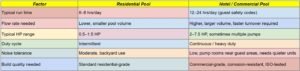 one part of a larger building water system being planned during construction.
How Pool Pump Sizing Actually Works
Pool pump sizing comes down to one core concept: turnover rate — how long it takes the pump to circulate the entire volume of water in the pool once.
Residential pools: typically sized for a full turnover every 8–12 hours
Hotel and commercial pools: typically sized for a full turnover every 4–6 hours, or faster depending on bather load and local regulations
The formula in simple terms: Pool Volume ÷ Desired Turnover Time = Required Flow Rate (in liters or gallons per hour). Once you know the required flow rate, the pump’s horsepower is selected based on that flow rate plus the pipe length, filter resistance, and any elevation change between the pool and the pump (known as “head”). This is the same head/flow logic covered in more general terms in our earlier piece on
choosing the right water pump for your house, which walks through pressure and sizing basics that also apply to pool systems.
A quick real-world example
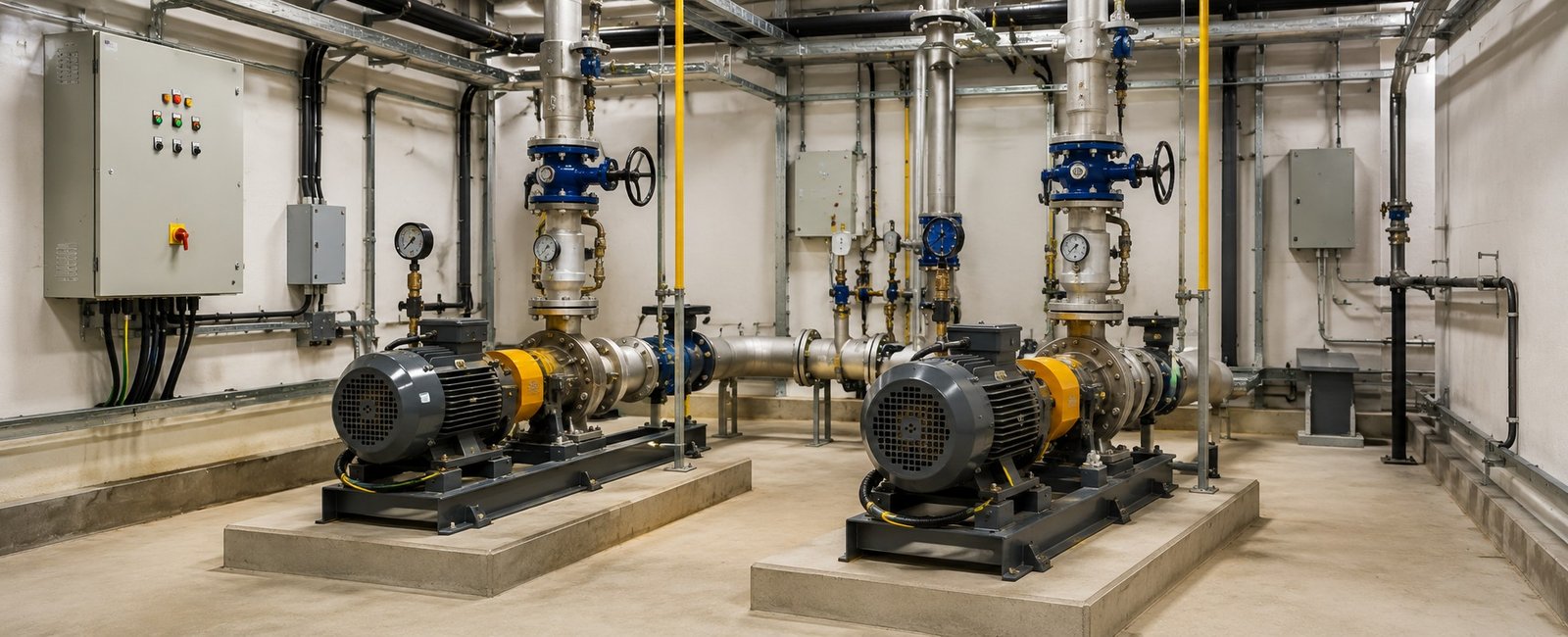
A 50,000-liter residential pool with a 10-hour turnover target needs roughly 5,000 liters/hour of flow — usually a 0.75–1 HP pump. A hotel pool holding 250,000 liters with a 6-hour turnover requirement needs around 41,600 liters/hour — a very different pump class, often 3 HP or higher, sometimes split across two pumps for redundancy so the pool never goes offline for maintenance.
Centrifugal vs. Circulation Pumps: Which Type Do Pools Actually Use
Pool pumps are almost always a form of centrifugal pump, sometimes paired with a booster or circulation pump for larger commercial systems that need to maintain constant pressure across multiple filtration zones. If you’re unclear on how these two pump types differ mechanically, our detailed breakdown in
Booster Pump vs Centrifugal Pump: Clearing Up the Confusion covers exactly this distinction, and it directly applies to pool system design, hotels with multiple pool zones or water features often need both types working together.
You can browse our
centrifugal pump range and circulation/booster pump range directly to compare specifications against the sizing numbers above.
Common Pool Pump Mistakes (That Cost Money Later)
- Oversizing “to be safe”, wastes electricity continuously and can be as costly a mistake as undersizing
- Ignoring pipe friction and elevation (head loss), a pump can be correctly sized on paper and still underperform once installed
- Using residential-grade pumps in hotel pool rooms, shorter lifespan under continuous duty, and higher noise levels near guest areas
- Skipping corrosion-resistant materials, Saudi Arabia’s heat and, in coastal cities, salinity in the air accelerate wear on standard-grade components
No redundancy on commercial systems, a single-pump hotel pool has no backup if that pump fails, risking pool closure and guest complaints
Maintenance That Extends Pump Life in Saudi Conditions
High ambient temperatures put extra thermal load on pool pump motors, and dust ingress is a common cause of premature bearing wear in outdoor pump rooms. A simple maintenance routine, checking motor temperature, clearing strainer baskets, and inspecting seals seasonally, extends pump life significantly and is far cheaper than early replacement. For hotels, this maintenance should be logged as part of routine facility management, not handled reactively after a failure.
Choosing a Supplier: What to Actually Ask
Whether you’re buying one pump for a villa or specifying a full pool system for a hotel project, a few questions separate a good decision from an expensive mistake:
- Is the pump rated for continuous duty, or intermittent residential use only?
- What’s the warranty and after-sales replacement policy if there’s a manufacturing defect?
- Is the supplier a manufacturer or a reseller — this affects lead time, pricing, and parts availability?
- Are the materials rated for Saudi climate conditions (heat, and salinity for coastal projects)?
Kanzotech Pumps has supplied pump systems across residential, commercial, and industrial projects in Saudi Arabia for over 25 years, with ISO-certified products and a dedicated after-sales replacement policy for manufacturing defects. You can review current
water pump pricing in Saudi Arabia for a sense of what different pump classes cost, or browse our full pump range to compare specifications directly.
If your project is based in the capital, our
Riyadh water pump supply page covers local stock availability and delivery for contractors and hospitality projects in the city.
Saudi-Specific Technical Requirements Buyers Often Miss
A few local specifics matter as much as pump sizing, and are worth confirming with your supplier before you buy:
Voltage and electrical standard
Saudi Arabia’s standard residential electrical supply is 220V, 50/60Hz, while most commercial and industrial installations run on 380V three-phase power. A pump rated for the wrong voltage/phase configuration either won’t run or will be damaged quickly — always confirm the voltage and phase your property or facility actually supplies before ordering.
SASO certification
Water pumps sold in Saudi Arabia require a SASO Certificate of Conformity (CoC) to clear customs and be legally sold, and applicable plumbing/water-flow products may also require a SASO Water Efficiency Label. Ask any supplier for current SASO documentation on the specific model you’re buying — this is separate from (and in addition to) general ISO manufacturing certification.
Running costs — what the numbers actually look like
Saudi Electricity Company applies a tiered residential tariff (roughly SAR 0.18/kWh for the first 6,000 kWh per month, rising to SAR 0.30/kWh above that), while commercial tariffs are typically flat-rate and generally higher than the base residential rate, varying by classification and consumption. A hotel running a 3 HP pump continuously will see this cost compound quickly — which is exactly why correct sizing (rather than “oversizing to be safe”) has a real, visible effect on the monthly electricity bill, not just a theoretical one.
Heat and pump room ventilation
With summer ambient temperatures regularly exceeding 45°C, pump motors — especially those running continuously in hotel plant rooms — need adequate ventilation and clearance around the motor housing to avoid thermal overload. Enclosed, poorly ventilated pump rooms are a common preventable cause of early motor failure in the region.
Approximate Pump Class and Price Range by Pool Type
Exact pricing depends on brand, materials, and flow/head requirements, but as a starting reference point:
- Small residential pool (0.5–1 HP): entry-level residential centrifugal pump range
- Large residential/villa pool (1–1.5 HP): mid-range residential or light-commercial pump range
- Boutique hotel/guesthouse pool (2–3 HP): commercial-grade centrifugal pump range
- Full-service hotel/resort pool (3–7.5 HP, often dual-pump): industrial-grade commercial pump range, typically requiring project-based quotation
For current model-specific pricing, see our full breakdown in
Water Pump Price in Saudi Arabia (2026), or request a project-based quote directly for hotel and commercial pool systems.
Get a Pool Pump Recommendation for Your Project
Share your pool volume, desired turnover time, and whether it’s a residential or hospitality project, and our team will recommend the right pump class and provide bulk/project pricing within 24-48 hours.
- Request a Quote (RFQ form): https://kanzotechpumps.com/#about
- WhatsApp: +966 54 750 9351
Frequently Asked Questions
What size pump does a hotel pool need?
It depends on pool volume and the turnover rate required (often 4–6 hours for commercial pools). A 250,000-liter hotel pool typically needs a pump in the 3 HP+ range, sometimes split across two pumps for redundancy.
Can I use a residential pump for a small hotel or guesthouse pool?
Only if the pool is small and lightly used. Most hotel pools run far longer duty cycles than residential pumps are built for, which leads to premature failure — commercial-grade pumps are almost always the safer choice.
How often should a pool pump be serviced?
At minimum, seasonally, checking strainer baskets, seals, and motor temperature. Hotels running pumps continuously should inspect more frequently as part of routine facility maintenance.
What’s the difference between a pool circulation pump and a booster pump?
A circulation pump moves water through the filtration loop continuously. A booster pump adds extra pressure for specific features like water jets or secondary filtration zones — larger commercial pools often use both.
Making the Right Choice for Your Pool
A pool pump is a long-term running cost, not a one-time purchase — getting the sizing and build quality right upfront is what keeps energy bills, water quality, and maintenance costs under control for years. Whether you’re outfitting a single villa pool or specifying systems for a hotel project across Saudi Arabia, our team can review your pool volume and turnover requirements and recommend the right pump class for your specific setup.
Ready to find the right pool pump for your project? Reach out to Kanzotech Pumps for a tailored recommendation and bulk pricing.








Comments
No comments yet. Be the first to comment!