


Water Pumps in Construction Projects: Planning Guide for Riyadh & Jeddah Contractors


Introduction
Ask any project manager in Riyadh or Jeddah what actually derails a construction schedule, and equipment failure rarely tops the list on paper. But talk to the people running the site, and a stalled pump is usually somewhere in the story, a flooded foundation pit, a plumbing pressure test that won’t pass, a delivery that was supposed to take a day and took three.
Water pumps aren’t the most exciting line item in a project plan. They’re also one of the easiest things to get wrong, because the “right” pump depends entirely on what’s happening on your specific site — not what worked on the last one.
This guide breaks down the pump types used across Saudi construction projects, why Riyadh and Jeddah sites often need different planning even for the same job, and how to build pump supply into your project management process instead of scrambling for it mid-phase.
Quick answer: Construction projects typically need three categories of water pumps — dewatering pumps (submersible sewage/drainage pumps) for foundation and excavation water removal, transfer pumps (gasoline or electric centrifugal units) for moving water across a site, and plumbing-support pumps (booster and multistage pumps) for testing and running building water systems during finishing stages.
What Are the Types of Pumps Used in Construction?
Most construction pump needs fall into a handful of categories, and each one is built for a different job on site. Picking the wrong category, not just the wrong model, is usually where problems start.
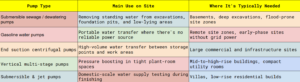
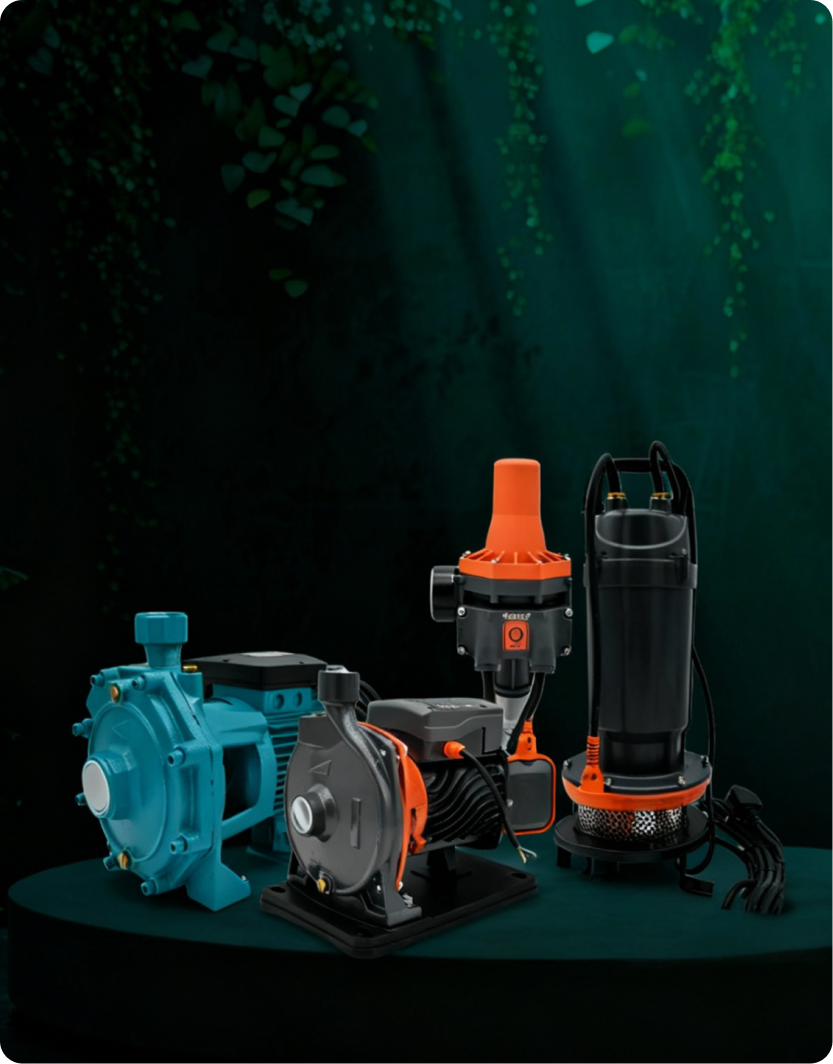
If you want to compare specifications side by side rather than by category, the full product range can be filtered by application, flow rate, and power source.
A quick way to think about it: dewatering pumps solve a problem you didn’t create (groundwater, rain, seepage). Transfer pumps solve a logistics problem (water needs to be somewhere it isn’t). Plumbing-support pumps solve a testing and handover problem (the system needs to prove it works before the client signs off). Most sites need all three at different phases, not just one.
A Real Example: How the Phases Actually Play Out
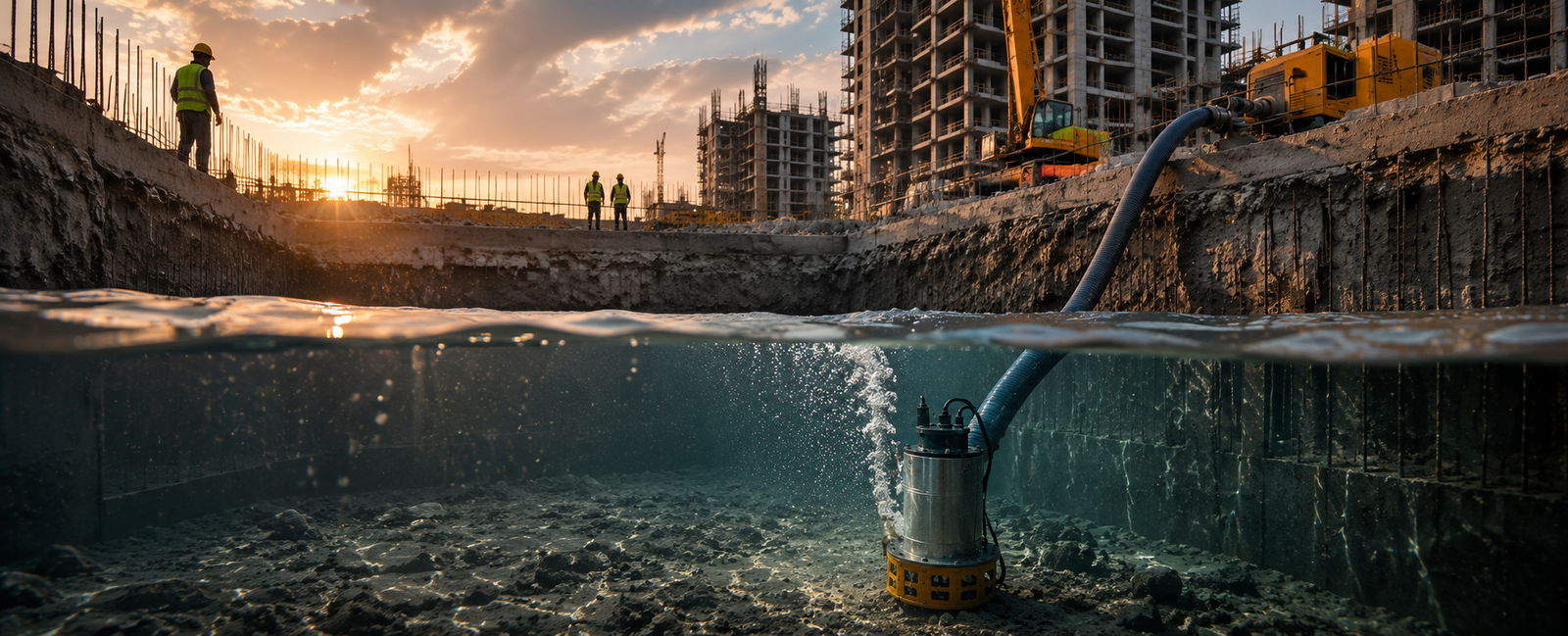
Take a mid-size commercial build in Riyadh, say, a five-story mixed-use block with two basement levels. Early in the project, the excavation for the basement hits groundwater during the wet season. That’s a dewatering job: a submersible sewage pump running near-continuously to keep the pit workable until the foundation is poured and waterproofed.
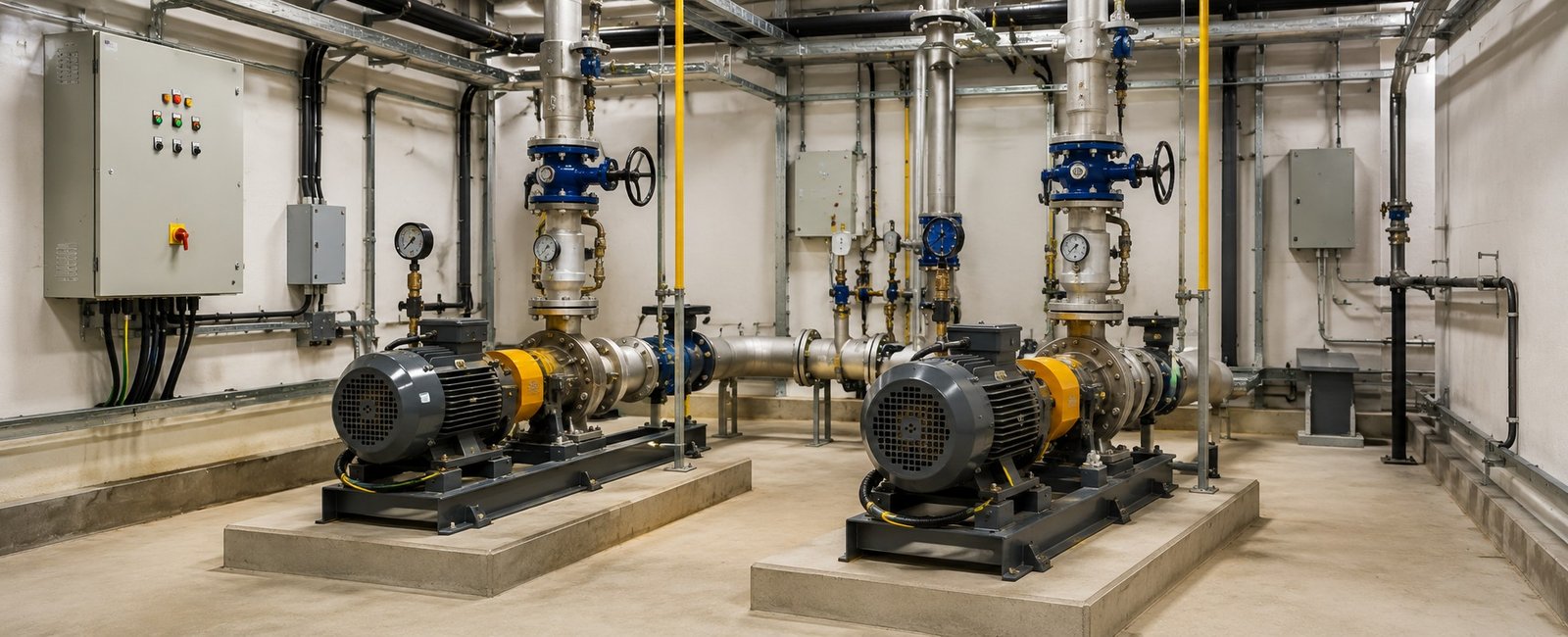
Once the structure is up and the site shifts to finishing work, the same project needs water moved from a ground-level storage tank up to a rooftop tank for testing the building’s plumbing system, a transfer job, usually handled with an end suction centrifugal pump or, for a build this size, a vertical multi-stage unit if space in the plant room is tight.
Finally, as plumbing installation wraps up, the contractor needs steady pressure to run pressure tests on every riser before handover, plumbing support, typically a booster pump sized to the building’s height and fixture count.
Three phases, three different pump categories, on the same project. A contractor who orders “a pump” once at the start of the job, rather than planning for all three phases — usually ends up either under-equipped for dewatering or scrambling to source a transfer or booster unit mid-project, right when the schedule has the least slack to absorb a delay.
Why Riyadh and Jeddah Projects Don’t Need the Same Pump Plan
It’s tempting to treat “construction project in Saudi Arabia” as one planning problem. In practice, Riyadh and Jeddah create genuinely different demands on a pump system.
Riyadh: Scale and Groundwater Depth
Riyadh’s construction volume covers residential towers, commercial developments, and public infrastructure running side by side, often across multiple contractor sites at once. That volume means pump demand is less about unusual site conditions and more about sheer continuity, units need to run for extended hours without failing, and replacement supply needs to be lined up before a project reaches its next phase, not after something breaks down. Our Riyadh pump supply page covers this in more depth for contractors and MEP firms working across the city.
Jeddah: Humidity, Coastal Groundwater, and Corrosion Exposure
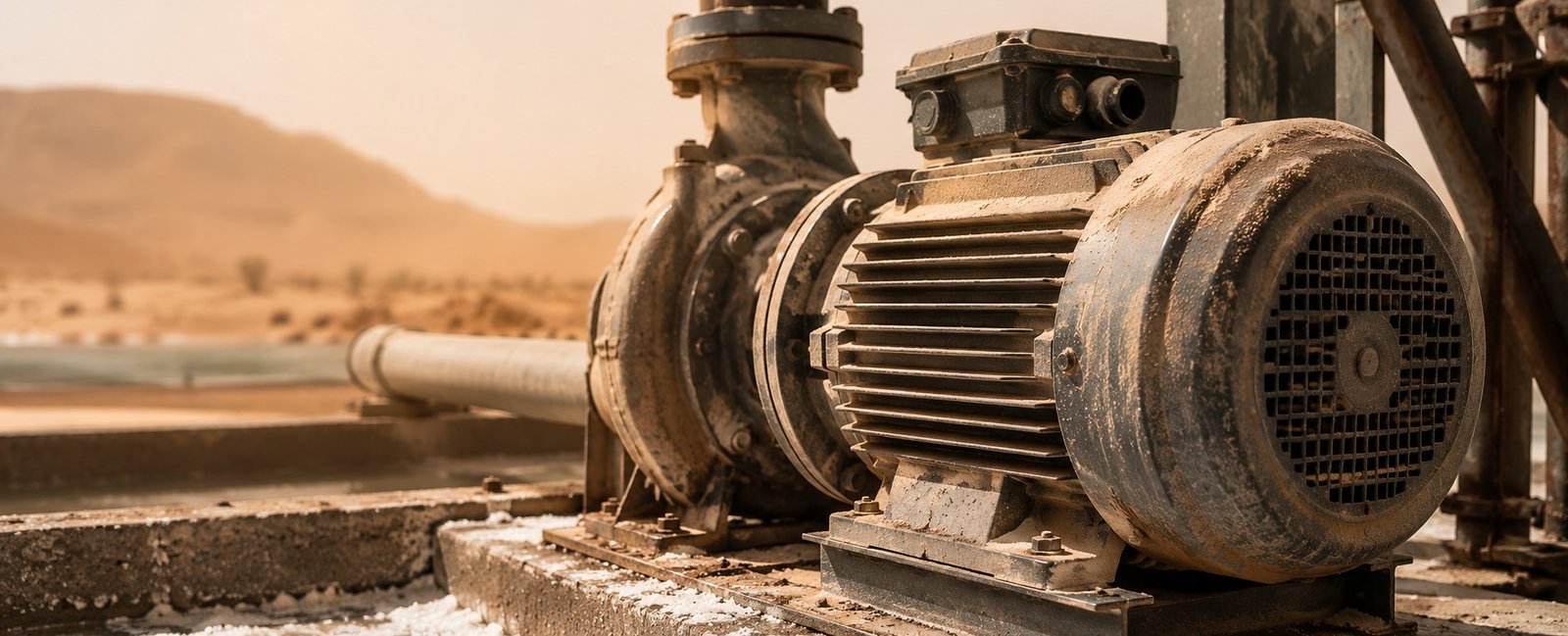
Jeddah’s Red Sea coastal position brings higher ambient humidity and, on many sites, shallower and more saline groundwater than an inland city like Riyadh. That changes two things: dewatering pumps may run more continuously on sites near the coast, and material selection (corrosion-resistant components, sealed electrical housings) matters more over the life of the project than it would inland. A pump spec that works fine in Riyadh isn’t automatically the right call for a Jeddah site with different soil and moisture conditions.
Contractors managing sites across both cities, along with Dammam and other regions, can coordinate supply per location and project phase through our construction project pump supply page, rather than sourcing separately for each site.
Site Dewatering vs Water Transfer vs Plumbing Support: Getting the Application Right
These three categories aren’t interchangeable, even though they all technically “move water.” Mixing them up is one of the most common reasons a pump underperforms on site.
Site dewatering is reactive by nature. Foundation pits fill with groundwater or rainwater, and the pump’s job is to keep the excavation workable. This needs a unit rated for continuous duty and solids handling, since site water is rarely clean.
Water transfer is about moving water where you need it, between storage tanks, work zones, or service areas across a large site. Here, consistent pressure over distance matters more than raw power, especially on multi-zone layouts common in Riyadh’s larger developments.
Plumbing support comes in during finishing stages, when temporary or permanent plumbing systems need steady pressure for installation and testing. A pump that’s undersized here doesn’t just slow the work, it produces failed pressure tests that have to be redone, which compresses the whole finishing schedule.
Treating all three as “just get a pump” is how contractors end up with equipment that’s technically running but not actually doing the job it needs to do.
How to Choose the Right Pump: A Simple Decision Framework
Before requesting a quote, four numbers make the conversation with a supplier much faster:
- Flow rate needed (m³/hr): how much water has to move, and how fast.
- Total head / pressure requirement: how high or how far the water needs to travel.
- Power source available on site: grid power, generator, or none yet (which points toward a gasoline unit).
- Duty cycle: is this running for a few hours a day, or continuously across a full shift?
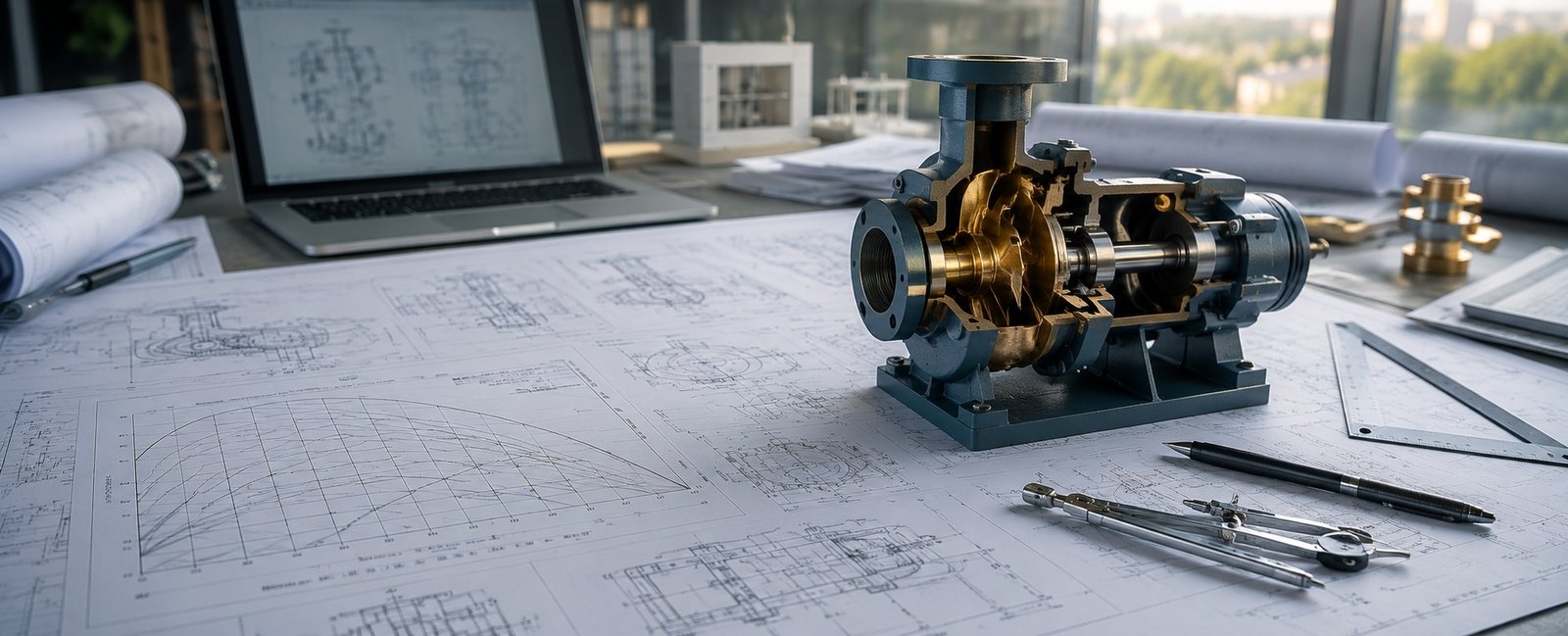
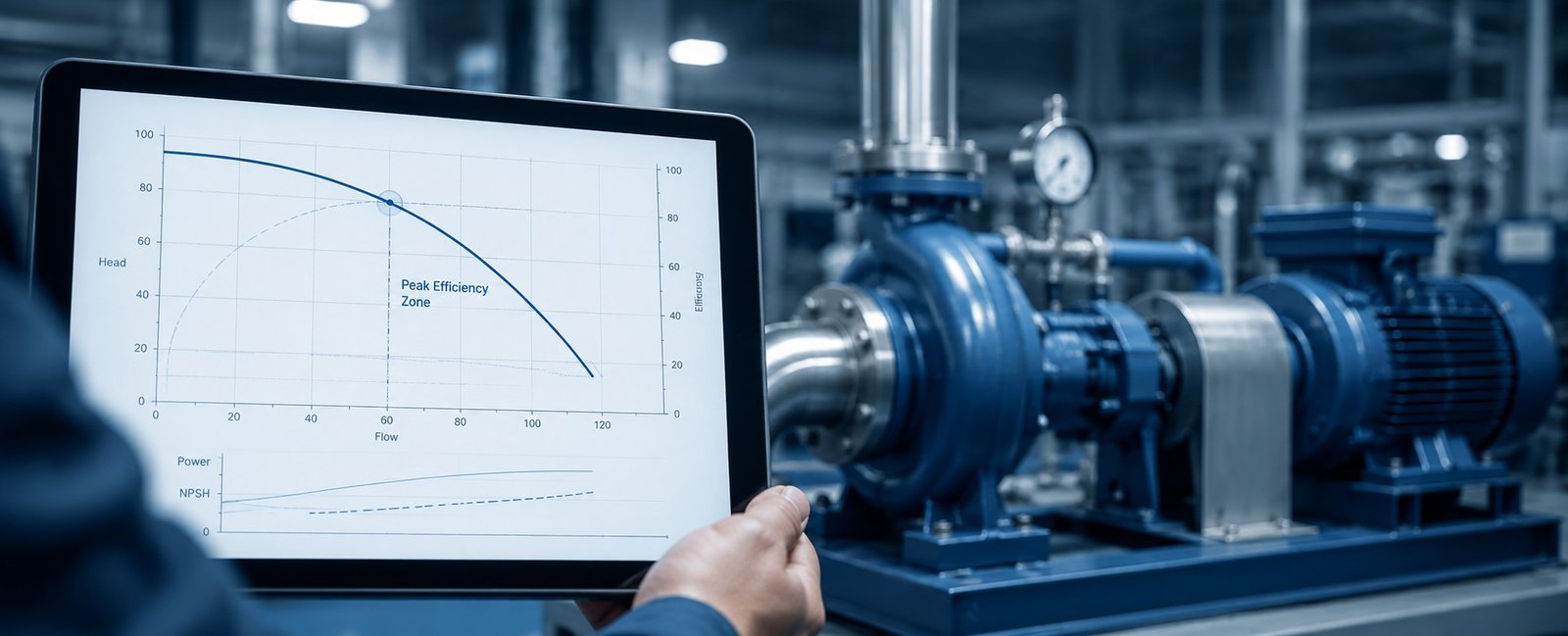
Here’s how that plays out in practice. Going back to the mid-size Riyadh build from the earlier example: the basement dewatering job might need a pump moving somewhere in the range of 40–90 m³/hr with a head of around 15–25 meters, running continuously through the wet excavation phase — which points toward a mid-capacity submersible sewage pump rather than a smaller domestic-grade unit that isn’t built for continuous duty. The rooftop transfer job, by contrast, cares less about flow volume and more about hitting the required head to reach a five-story roof tank reliably, which is where an end suction or vertical multi-stage pump earns its place over a general-purpose transfer unit.
Getting these numbers wrong in either direction has a cost. Undersizing means the pump runs flat-out and still can’t keep up, which either slows the work or burns the unit out early. Oversizing isn’t free either — it usually means paying more upfront than the job requires, plus higher power draw for capacity you’re not using.
On pricing, ranges vary a lot by pump category, capacity, and brand — a domestic booster pump and an industrial-duty dewatering unit aren’t remotely the same purchase. The Water Pump Price in Saudi Arabia guide breaks down general SAR market ranges by pump type if you want a sense of where your project’s budget should land before requesting a formal quote.
Sites with non-standard conditions, deep excavations, long transfer distances, multi-phase timelines, usually benefit from a short technical conversation before ordering rather than picking off a spec sheet. That’s a normal part of the RFQ process for most contractors we work with.
Common Project Management Mistakes That Lead to Pump Problems
Pump failures on construction projects are rarely about the pump itself. They’re usually a project management gap that shows up as an equipment problem:
- Ordering pumps per-task instead of per-phase. Sourcing a pump only when a need becomes urgent turns procurement into a fire drill, and urgency pricing along with it.
- No supply coordination across multi-site contracts. Contractors running work in both Riyadh and Jeddah sometimes source locally per site, missing the efficiency of planning supply across locations at once.
- Underestimating duty cycle. A pump specified for occasional use, then run continuously through an active excavation phase, tends to fail early — not because it’s faulty, but because it was never spec’d for that load.
- Treating dewatering, transfer, and plumbing-support needs as one purchase. As covered above, these are different jobs. A single “do-it-all” pump choice usually underperforms in at least one of the three roles.
Building pump requirements into the project schedule, the same way material deliveries or subcontractor timelines are planned, removes most of these issues before they start.
Frequently Asked Questions
- What type of pump is best for foundation dewatering in Riyadh or Jeddah?
A submersible sewage or dewatering pump rated for continuous duty and solids handling is the standard choice for foundation pits and excavations in both cities. Jeddah sites nearer the coast may need units with additional corrosion protection due to groundwater salinity. - Do construction pump needs differ between residential and commercial projects?
Yes. Residential builds typically need lower-capacity dewatering and plumbing-support pumps, while commercial and infrastructure projects need higher-flow transfer and dewatering units capable of continuous multi-hour operation. - Can one contractor coordinate pump supply across multiple cities?
Yes. Contractors working across Riyadh, Jeddah, Dammam, and other regions can plan supply per project phase and location through a single supplier relationship rather than sourcing locally at each site. - How do I know if I need a gasoline pump instead of an electric one?
If a site zone doesn’t yet have reliable grid power, common in early excavation or remote site phases, a gasoline water pump is the more practical short-term choice. - What happens if a pump fails mid-project? This is exactly why phase-based supply planning matters. Sourcing a replacement reactively after a failure typically costs more in downtime than the pump itself. Planning primary and backup supply in advance for active phases avoids this.
- Does Kanzotech supply pumps for both small residential sites and large infrastructure projects?
Yes, from single-site residential builds to multi-phase commercial and infrastructure contracts, with supply planned around project scale and timeline.
Planning Ahead Keeps Your Project Moving
Pump failures, supply gaps, and pressure issues on construction sites are rarely random, they trace back to planning decisions made (or skipped) earlier in the project. Whether you’re managing a single villa build in Jeddah or coordinating multi-phase work across Riyadh, Jeddah, and Dammam, aligning pump supply with your project schedule is a straightforward fix that prevents most of the disruption before it happens.
If you’re planning pump requirements for an upcoming phase, our team can help match the right configuration to your site conditions. Request a quote or browse the full pump range to compare specifications directly.
Related reading:






Comments
No comments yet. Be the first to comment!